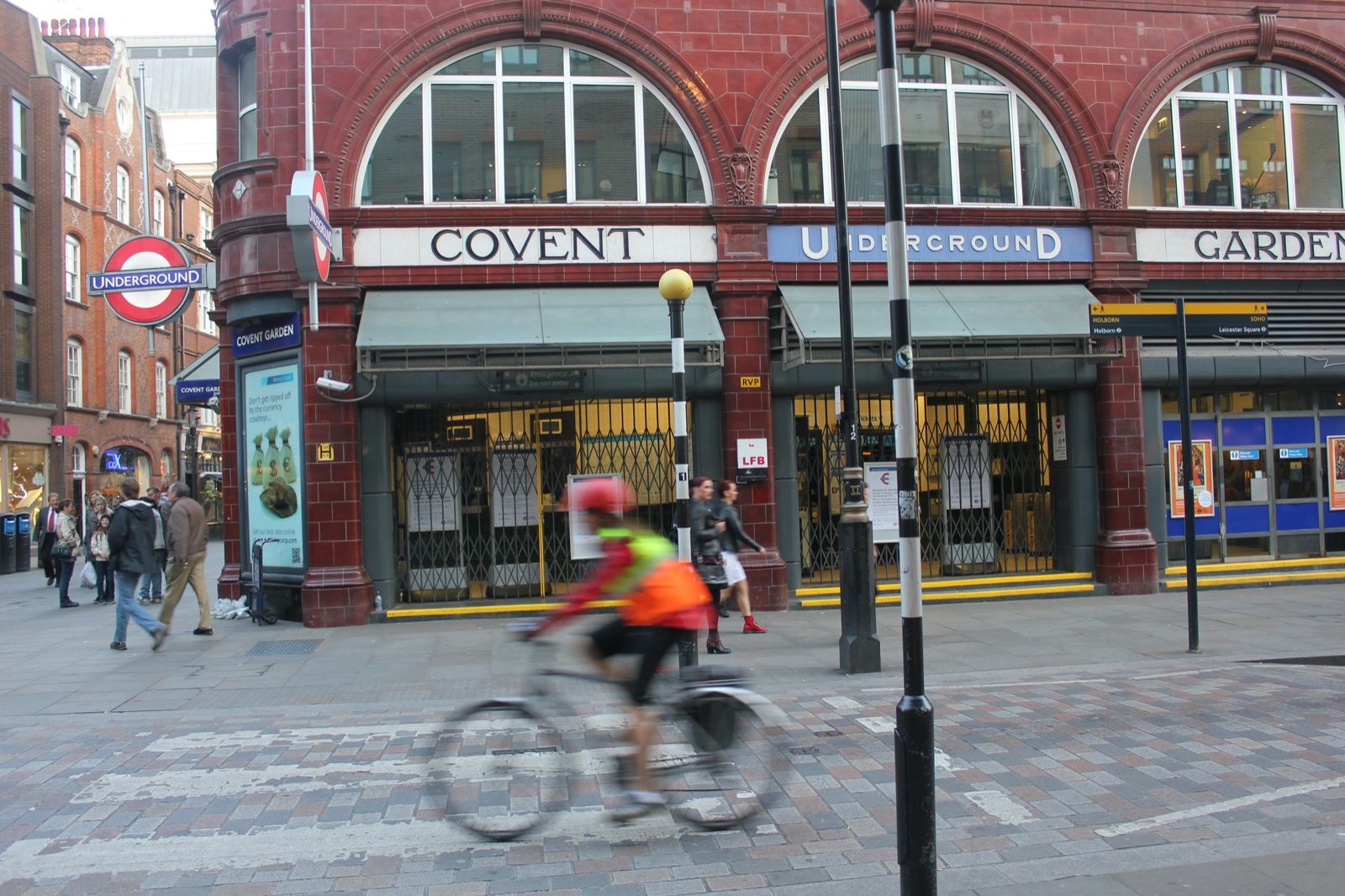
The first of eight Tube strikes starts at noon Thursday, over a four-day week
Why it hits youIf you get the Tube to school, college, uni or work, Thursday afternoon and Friday morning will be harder, and the Circle and Piccadilly lines won't run at all on Thursday. Seven more strikes are planned, including the last Saturday before Christmas and the first week back in January. Underneath it is a bigger question you may face in your own working life: is a four-day week a good deal if the days get longer?
London Underground drivers in the RMT union will walk out for 24 hours from midday on Thursday, after last-ditch talks on Tuesday ended without a deal. It's the first of eight strikes running to late February. The row is over a four-day week. TfL says it's voluntary and means less time at work for the same pay. The RMT says it's a cover for longer shifts and job cuts. The other drivers' union, Aslef, backs the deal.
The Facts
What everyone agrees on
Before anyone spins it. Every one of these is checkable.
-
RMT Tube drivers will strike for 24 hours from noon on Thursday 26 November, after talks at the conciliation service Acas on Tuesday ended without agreement. The Independent ↗
-
It's the first of eight 24-hour strikes, each starting at midday: 26 November, 17 and 19 December, 4 and 6 January, and 17, 23 and 25 February. MyLondon ↗
-
On Thursday, services start to reduce from 10am. No service is expected on the Circle and Piccadilly lines all day, none on the Waterloo & City line from 12pm, and no Tube service at all after 9pm. The Mirror ↗
-
On Friday, services are expected to start from about 7am, with disruption until around midday and normal services by around 6pm. The Standard ↗
-
The Elizabeth line, DLR, London Overground, buses and trams are expected to run as normal, but are likely to be busier than usual. The Mirror ↗
-
Drivers were first offered a 34-hour four-day week or staying on 38.5 hours over five days. TfL then added a third option: 36 hours over five days, on the new terms, staying at the same depot. The Standard ↗
-
Aslef, a rival union representing drivers, has accepted TfL's four-day week deal, so its drivers won't take part in the strikes. MyLondon ↗
-
Qualified Tube drivers typically earn around £73,000 a year in 2026, up from £55,011 in 2018/19. The Standard ↗
Every Side · 1 of 3
The RMT union
Why staff are walking out: “There is nothing voluntary about a scheme that forces drivers to give up existing protections”
The RMT says the new deal would mean more time driving trains, longer duties, earlier starts and later finishes, shifts changed at short notice, and less freedom to move depots. It says drivers who refuse could be moved from their depot into a flexible pool of staff. RMT general secretary Eddie Dempsey said: “This is not about improving work-life balance. It is about squeezing more work out of fewer drivers while giving management greater flexibility at the expense of our members.” He said the union had “already suspended strike action three times for talks, yet no real improvements have been forthcoming.” And he insisted: “RMT is not opposed to a genuine four-day working week that benefits our members, but we will not accept it being used as a vehicle for job cuts, intensified working and the erosion of terms and conditions.”
- Eddie Dempsey, RMT general secretary
- RMT
Side labels are our editorial calls for now. How we'll rate lean
Every Side · 2 of 3
TfL, Aslef, business groups and critics
The case against: a shorter week, no pay cut, and a free choice
TfL says nobody is forced onto four days. Nick Dent, who runs customer operations at London Underground, said: “We have amended our proposals to guarantee that drivers who wish to continue working a five-day working pattern can do so.” He added: “We continue to believe that the majority of the concerns from the RMT have now been resolved and we urge the RMT to put this proposal to their members.” Aslef, the other drivers' union, says the deal gives drivers “an extra 35 days off every year”. Its organiser Finn Brennan said: “A strike designed to stop people having the choice of a shorter working week and more time off is a strange choice to make.” Ed Richardson of the business group BusinessLDN said the strikes “will hit the hospitality sector particularly hard during the vital Christmas trading season.” Writing in City AM, James Ford went further: “Rising RMT militancy is making it harder and harder to justify the continued existence of Tube drivers at all.”
- Nick Dent, London Underground
- Finn Brennan, Aslef
- Ed Richardson, BusinessLDN
- James Ford, City AM
Side labels are our editorial calls for now. How we'll rate lean
Every Side · 3 of 3
Getting around
What it means for you: plan for Thursday afternoon and Friday morning
Trains should run normally until about 10am on Thursday, then start to thin out. The strike officially starts at midday. There'll be no Circle or Piccadilly line all day, and no Waterloo & City line from midday. Most other lines will run, but with disruption, and after 9pm no Tube service is expected. On Friday, trains start later, from about 7am, with disruption until around midday and things back to normal by about 6pm. The Elizabeth line, DLR, London Overground, buses and trams should all run, but they'll be busier than usual, so you might have to wait for a few buses. If you're going east to west across central London, the Standard suggests the Elizabeth line. Buses 14, 19, 91 and 10 cover parts of the Piccadilly line. TfL's advice: “check before they travel and allow extra time for their journeys”. The next strikes start at noon on 17 and 19 December, 4 and 6 January, and 17, 23 and 25 February.
- TfL
- The Standard
- The Mirror
Side labels are our editorial calls for now. How we'll rate lean
The Blindspot · what the headlines skip
The RMT skips that the main drivers' union backs the deal
Aslef, the main Tube drivers' union, has warmly welcomed the four-day week and fully endorsed the plans. The RMT's case that the deal hurts drivers isn't shared by the main drivers' union.
The Blindspot · what the headlines skip
TfL's “voluntary” deal has small print
Alongside the shorter week, TfL wants to cut the one-week notice for changing shifts, move spare-shift start times by up to two hours either way, and only let drivers switch lines every five years. The RMT also points to early Bakerloo line rosters that it says show big staff cuts.
The Blindspot · what the headlines skip
This strike isn't about pay
Critics often point to drivers' £73,000 salaries. But the RMT already accepted an inflation-linked pay deal. This row is about hours, shifts and working conditions, not wages.
Your Call
- The RMT union: not yet
- TfL, Aslef, business groups and critics: not yet
- Getting around: not yet
Only you can see this. It's saved on this device and never sent anywhere.
Receipts
Every source, one tap away
Don't take our word for it. This is everything the breakdown is built on.
By No Glaze News · published
Next story Just 1 in 5 Black Friday deals hit the year's lowest price. How to spot them