Some police didn't know a facial recognition match isn't proof, watchdog finds
Why it hits youForces run around 25,000 of these searches every month. If you've ever been photographed in custody, your face could be in the database, and inspectors found some photos that should have been deleted were still being searched. The government is promising new laws and a new, less biased system from next year. The argument is over whether that's enough, and what happens until then.
Police use facial recognition to compare CCTV or phone images with about 19 million custody photos. The police inspectorate says some officers didn't realise a possible match is only a lead that has to be checked, not evidence. It warns this risks wrongful arrests, especially of people from ethnic minorities, because the system is more likely to wrongly flag them. Police say the technology helps catch dangerous criminals. Campaigners say it's being used with too few safeguards.
The Facts
What everyone agrees on
Before anyone spins it. Every one of these is checkable.
-
His Majesty's Inspectorate of Constabulary and Fire and Rescue Services (HMICFRS) inspected seven forces (the Met, British Transport Police, Cheshire, Dorset, Gwent, Northumbria and Surrey) and the National Crime Agency in March and April 2026. PA (via The Standard) ↗
-
The report covers only retrospective facial recognition, not live cameras. It found “some investigators didn't know that RFR results were intelligence rather than evidence”, and in “a small number of cases” officers relied too heavily on results. The Guardian ↗
-
Inspectors said bias remains in the algorithm, which is more likely to wrongly flag people from ethnic minorities as suspects, and that there is “no comprehensive statutory framework” (a single law) governing police use of the technology. The Guardian ↗
-
Inspectors found some custody photos that should have been deleted under existing rules were still available for searches. Only two forces had audited the correct number of searches, and seven had not appointed an auditor. PA (via The Standard) ↗
-
Police run around 25,000 searches a month against about 19 million custody images. Government-commissioned testing found that, at the police setting, the system returns the right person in over 99% of searches when they're in the database, but in “a limited set of circumstances” is more likely to wrongly include some groups. Home Office (GOV.UK) ↗
-
That testing, by the National Physical Laboratory, found the system produced false matches for Black women almost 100 times more often than for white women at certain settings. Liberty Investigates ↗
-
On 4 November the government promised a specific law, a new independent watchdog that could stop forces using the technology, and a new retrospective search algorithm for forces to roll out from next year. Home Office (GOV.UK) ↗
-
For live cameras, the Home Office says independent testing found “at worst a 1 in 6,000 chance” of a false alert with a 10,000-image watchlist, and no significant differences by age, gender or ethnicity at the settings police use. Home Office (GOV.UK) ↗
Every Side · 1 of 3
Police and government
“The biggest breakthrough for catching criminals since DNA matching”
That's Home Secretary Shabana Mahmood, who last week promised “clear laws” and a new independent watchdog for facial recognition. The government says live cameras in Croydon led to 173 arrests, including suspects wanted for rape and kidnap. Police say searches helped identify 127 suspects after the 2024 riots that followed the Southport killings. Ben Russell, who leads on facial recognition for police chiefs, said: “Policing remains committed to the ethical, proportionate and responsible use of retrospective facial recognition to help investigate crime, bring offenders to justice and keep communities safe.” The Home Office says “there is human involvement in every step of the process”, and a new algorithm tested as having no significant bias is due from next year.
- Shabana Mahmood, Home Secretary
- National Police Chiefs' Council
- Home Office
Side labels are our editorial calls for now. How we'll rate lean
Every Side · 2 of 3
What it means for you
A match is meant to be a lead, not proof
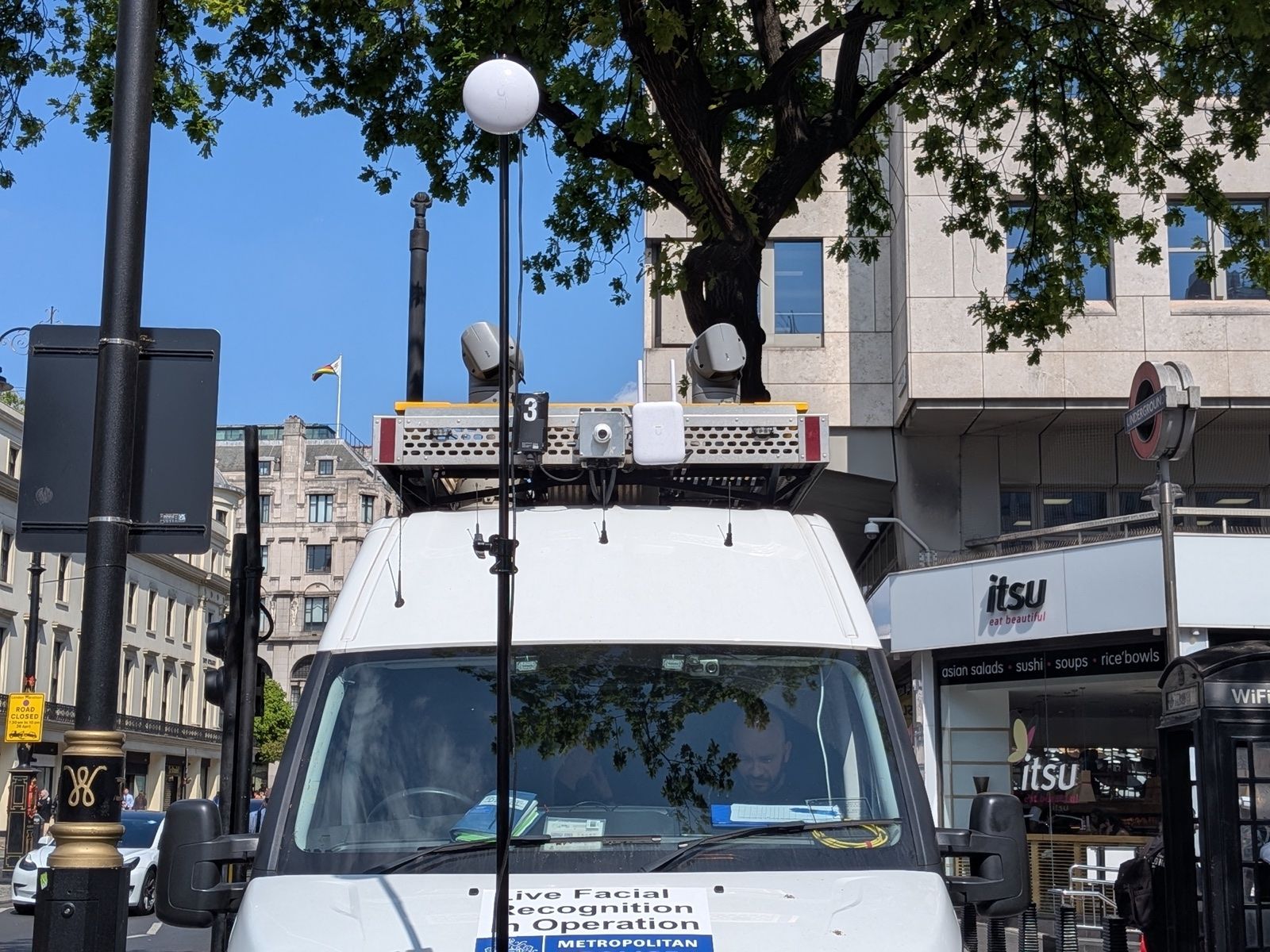
There are two main kinds. Retrospective searches compare images from CCTV, phones, dashcams or doorbells with photos of people taken on arrest. A trained operator checks any possible match, then an investigating officer is supposed to look for other evidence before acting. Live cameras, usually on vans, scan people walking past and compare them with a watchlist of wanted people. Police are expected to put up signs. If you're not on the watchlist, your data is deleted straight away. If you are flagged, an officer decides what to do and needs reasonable grounds before arresting anyone. Live cameras have been used on high streets, at events and at London railway stations.
- Home Office factsheet
- HM Inspectorate of Constabulary
Side labels are our editorial calls for now. How we'll rate lean
Every Side · 3 of 3
Civil liberties and racial justice campaigners
“Alarming”: innocent people could get a knock on the door
Jasleen Chaggar of Big Brother Watch said: “The revelations that officers are treating facial recognition as bona fide evidence rather than a probability score is alarming.” She said police were using it “at biased settings that are more likely to misidentify women, Asian and black people”. Big Brother Watch says 80% of people misidentified by facial recognition in London in 2025 were Black. Prof Pete Fussey, a former police adviser, said the report shows “investigators taking the computer's suggestions at face value without further checks.” Liberty says the government “must urgently pause all facial recognition use by public bodies until new laws are in place”.
- Big Brother Watch
- Prof Pete Fussey, University of Southampton
- Liberty
Side labels are our editorial calls for now. How we'll rate lean
The Blindspot · what the headlines skip
Police and government skip how long the bias was known
Police chiefs were told the search system was biased in September 2024. They raised the match threshold to cut the bias, then reversed it a month later after forces complained it produced fewer leads. Searches returning possible matches fell from 56% to 14% at the higher setting.
The Blindspot · what the headlines skip
Critics skip that the public mostly backs it
The inspectors themselves found “the public generally supported” police use of retrospective searches. They called for better safeguards and clearer law, not a ban, which is what Liberty wants until new laws arrive.
The Blindspot · what the headlines skip
Nobody knows how many people were wrongly suspected
Police chiefs' documents said no wrongful arrests had been reported from these searches as of November 2025, but it isn't known how many people were questioned after being wrongly identified. Big Brother Watch says police aren't even logging their use of these searches.
Your Call
- Police and government: not yet
- What it means for you: not yet
- Civil liberties and racial justice campaigners: not yet
Only you can see this. It's saved on this device and never sent anywhere.
Receipts
Every source, one tap away
Don't take our word for it. This is everything the breakdown is built on.
By No Glaze News · published