Covid inquiry: open borders and slow testing left UK ‘extremely vulnerable’
Why it hits youIf you were at school or uni in 2020 and 2021, this report is partly about why you spent so long learning from home. The inquiry says failing to test, trace and isolate early meant governments were “repeatedly forced” into lockdowns and school closures. Its nine recommendations are about the next pandemic: a plan for border controls, a single UK-wide test and trace system, a UK-wide contact-tracing app, and money for people told to stay at home. Whether any of that happens is now up to the government.
The UK Covid-19 Inquiry has published its seventh report, on testing, contact tracing and self-isolation during the pandemic. Its chair, Baroness Heather Hallett, says the UK was “woefully ill-prepared” and that Covid spread “virtually unchecked” for the first three months. She also says letting people travel in and out of the country almost freely in the first half of 2020 was a “missed opportunity” to slow the virus. Bereaved families call the testing system an “abject failure that cost lives”. People who ran it say they had to build it from scratch, and at the end of January 2020 the World Health Organization advised against travel bans.
The Facts
What everyone agrees on
Before anyone spins it. Every one of these is checkable.
-
This is the seventh of 10 reports from the UK Covid-19 Inquiry. It is based on oral evidence from 41 witnesses at public hearings, 200 written statements and more than 23,000 documents. The Guardian ↗
-
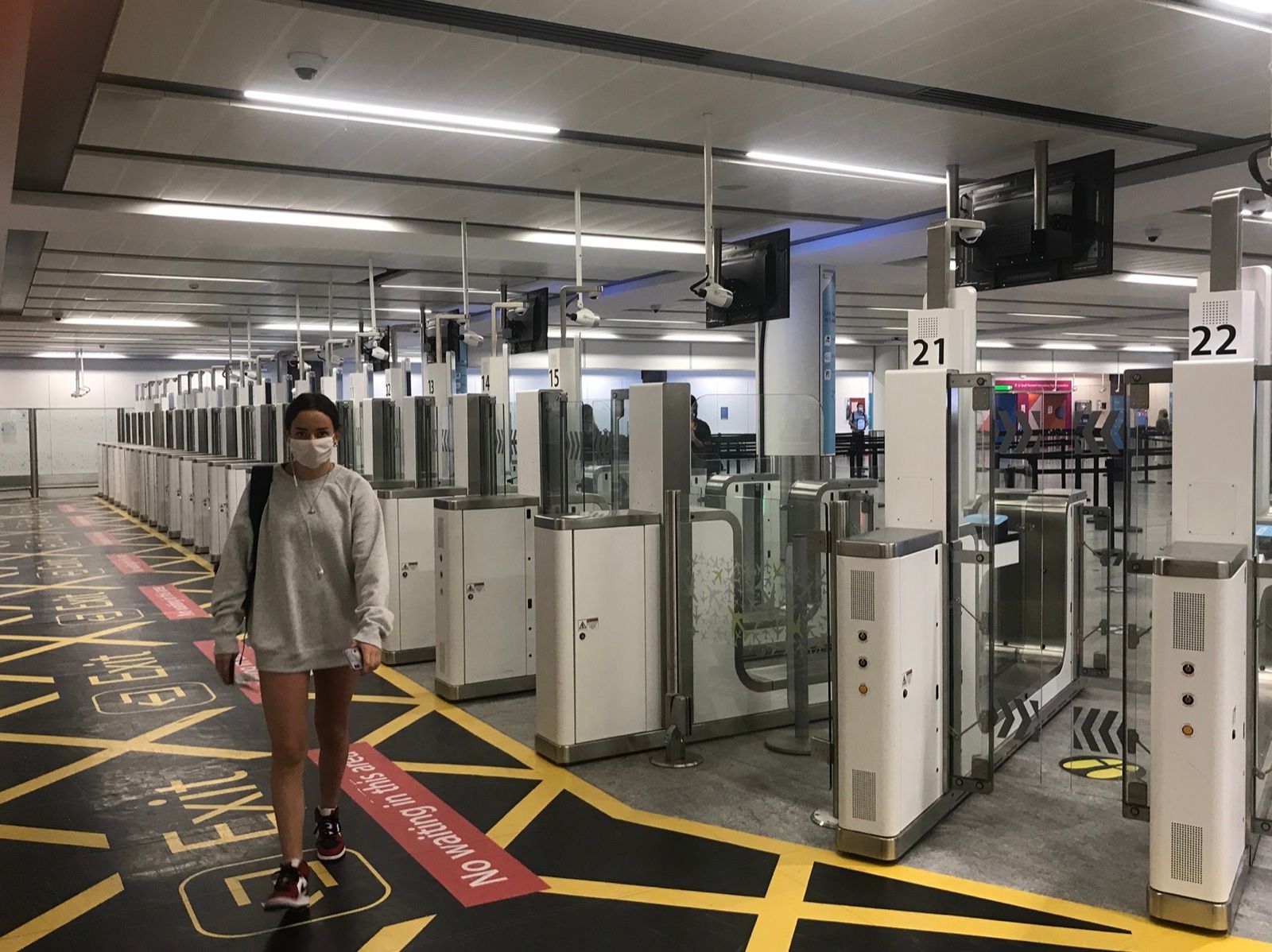
By April 2020, 93% of countries and territories had brought in border measures such as flight suspensions, border closures or travel restrictions. The UK brought in no further border measures until June 2020. The Standard ↗
-
About 6.8 million people arrived in the UK by air in February 2020, and 3.8 million in March 2020. The Independent ↗
-
In February 2020, a coach of tourists from Wuhan entered England and travelled on to Scotland, Northern Ireland and the Republic of Ireland. The Guardian ↗
-
More than £25bn was spent on the NHS Test and Trace system in England. The Guardian ↗
-
By June 2020, contact tracers in Northern Ireland reached 92% of people who tested positive. In England, just 42% of close contacts of people with Covid were being reached that month. The Mirror ↗
-
For one week during the pandemic, about 7% of UK adults, around 4.5 million people, were self-isolating. The Independent ↗
-
The inquiry has cost more than £200m, making it the most expensive public inquiry in history. The Guardian ↗
Every Side · 1 of 3
Bereaved families and campaigners
“Our loved ones paid with their lives”
Covid-19 Bereaved Families for Justice UK, which speaks for families who lost someone, said before the report came out: “The UK’s test and trace system was an abject failure that cost lives.” After it was published, a spokesman for the group told the Daily Mail: “Our loved ones paid with their lives for the last government's failure to prepare. This government must act now, while it can still spare others that loss.” He said people responsible for failures “should be stripped of any honours they hold”. Clare Fletcher, a solicitor for more than 7,000 bereaved families, called test and trace “a shambolic and chaotic system that led to avoidable loss of many lives despite the eyewatering sums of taxpayers’ money that were injected into the system.” Dr John Puntis of the campaign group Keep Our NHS Public told the Morning Star: “Hallett seems to have drawn similar conclusions with respect to the poor planning and lack of capacity that made lockdown inevitable.” Doctors raised the alarm too. Prof Philip Banfield of the British Medical Association told the inquiry: “We couldn’t understand why the Government was apparently abandoning basic public health protection measures.” And Prof Alan McNally, who studies microbial genomics, told the inquiry that if another pandemic came soon, “in terms of delivering tests, we’ll be exactly where we were at the start of 2020”.
- Covid-19 Bereaved Families for Justice UK
- Clare Fletcher, solicitor for bereaved families
- Dr John Puntis, Keep Our NHS Public
- Prof Philip Banfield, British Medical Association
- Prof Alan McNally, University of Birmingham
Side labels are our editorial calls for now. How we'll rate lean
Every Side · 2 of 3
What the inquiry found, and what it wants next time
Too slow to test, too open at the border, and a plan for next time
On borders, Baroness Hallett said: “The decision not to implement widespread border control measures from the outset of the Covid-19 pandemic represented a missed opportunity by the UK Government to try to slow the spread of infection by reducing the risk of imported cases.” In January 2020 the UK only asked, rather than ordered, travellers from Wuhan in China to self-isolate. There were no further border measures until June. The report says 18 February 2020, when the UK had only nine confirmed cases, would have been an ideal time for travel restrictions, and that a 14-day self-isolation rule for everyone arriving “could have had a significant impact”. On testing, she said: “The UK entered the Covid-19 pandemic woefully ill-prepared to implement effective, nationwide test, trace and isolate systems. This left decision-makers effectively blind to the scale of the highly contagious virus.” Because of that, she said, governments were “repeatedly forced to resort to harsher measures, such as national lockdowns and school closures, with devastating consequences for so many.” Her nine recommendations include planning for border controls, a single UK-wide test, trace and isolate system, a UK-wide contact-tracing app, and plans for money and practical help for people told to self-isolate. Her verdict on the human cost: “Too many lives were cut short. Too many died without the comfort of their loved ones around them.” When we published, we had not seen a response to the report from the government.
- Baroness Heather Hallett, inquiry chair
Side labels are our editorial calls for now. How we'll rate lean
Every Side · 3 of 3
Those who ran the response, and the advice at the time
“It was a cottage industry and we needed industrial scale capacity”
That's Matt Hancock, health secretary in 2020, giving evidence to this part of the inquiry in May 2025. He blamed the slow start on Public Health England, saying it “didn’t have the operational capacity to scale [up]”. He also argued the thinking everyone started with was wrong: “The doctrine that we had going into the pandemic, that was shared by most of the Western world and the World Health Organisation, was wrong.” His message for the future: “What matters is that it's done and it is planned for next time to be ready to be done.” Dido Harding, who ran NHS Test and Trace, accepted one point: “with the benefit of hindsight, you’d do it [use local expertise] earlier.” The report itself gives some credit. It says ministers “invested considerable time, effort and resources in developing a scaled-up system” and that, once it was set up, “it was extremely effective”. On borders, the world's health advice at the time pointed the other way. On 30 January 2020, the World Health Organization's emergency committee said: “The Committee does not recommend any travel or trade restriction based on the current information available.” We looked for responses from ministers in post in 2020, and from airlines and the travel industry, to today's border findings, but had not found any when we published.
- Matt Hancock, health secretary in 2020 (evidence, May 2025)
- Dido Harding, former head of NHS Test and Trace
- The inquiry report
- World Health Organization (January 2020)
Side labels are our editorial calls for now. How we'll rate lean
The Blindspot · what the headlines skip
Calls to shut borders say less about the cost
New Zealand, an island nation, closed its borders early in 2020. Its own inquiry found that was crucial in stopping large-scale spread, and noted that some Pacific countries avoided lockdowns by closing their borders. But it also found families were separated for years, and people stuck abroad compared the quarantine booking system to a “cruel lottery”. It said both border systems “had significant shortcomings”.
The Blindspot · what the headlines skip
Hindsight critics say less about the advice in 2020
The report says early border controls were a missed opportunity. But at the end of January 2020, the World Health Organization's emergency committee said it did “not recommend any travel or trade restriction”. The inquiry also says that once the testing system was scaled up, “it was extremely effective”.
The Blindspot · what the headlines skip
Defenders say less about who couldn't afford to isolate
The people who ran the system focus on how hard it was to build. But the inquiry heard of people forced to choose between “self-isolating and losing income, or going to work and risking spreading the virus”, and said it was “unsurprising that levels of compliance with self-isolation measures were low”. Dido Harding told the inquiry that more money for people isolating could have saved more lives, and that Rishi Sunak, then chancellor, refused to raise the payments.
Your Call
- Bereaved families and campaigners: not yet
- What the inquiry found, and what it wants next time: not yet
- Those who ran the response, and the advice at the time: not yet
Only you can see this. It's saved on this device and never sent anywhere.
Receipts
Every source, one tap away
Don't take our word for it. This is everything the breakdown is built on.
By No Glaze News · published