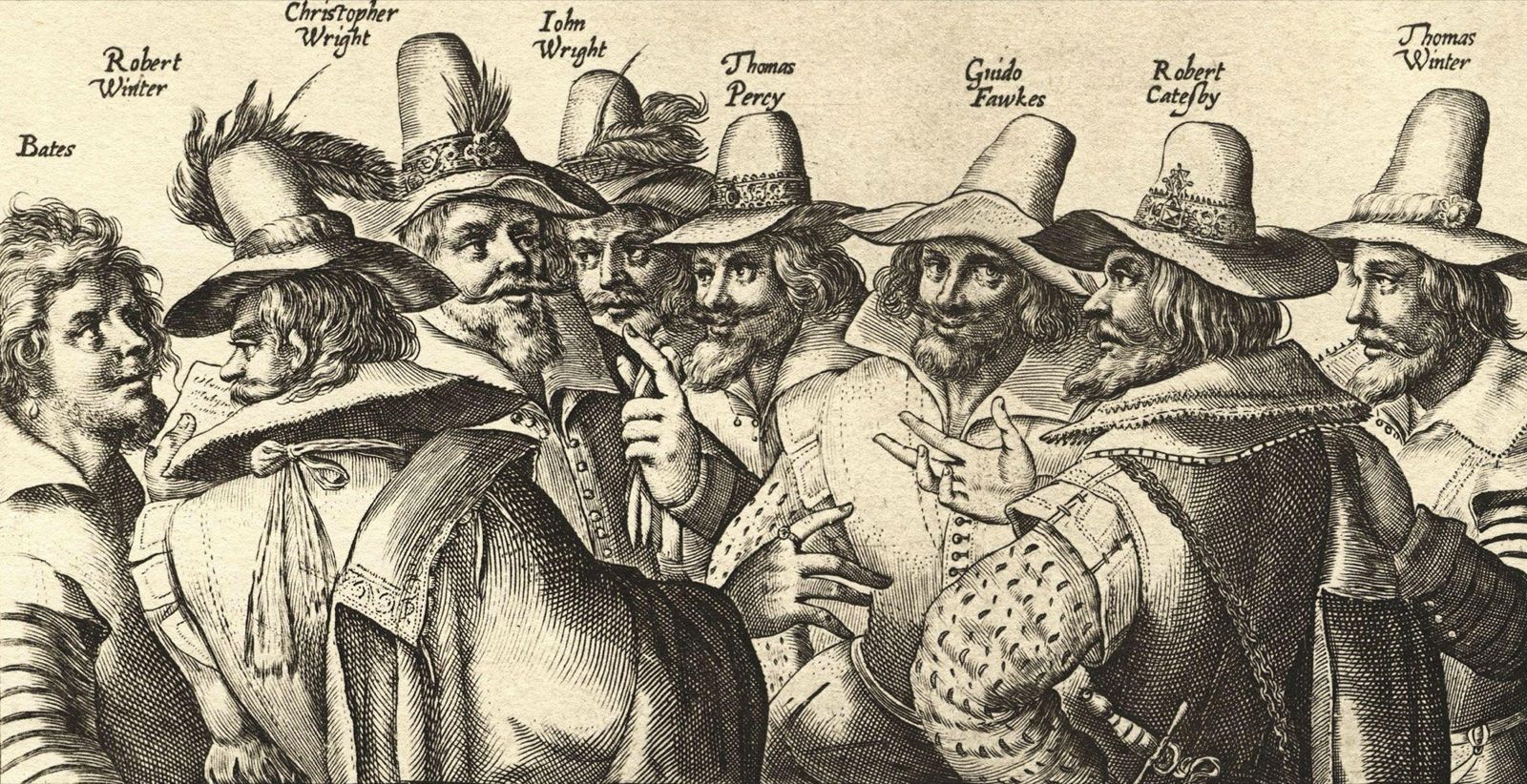
Bonfire Night: how Guy Fawkes went from Britain's villain to a rebel icon
Why it hits youBonfire Night is one of the biggest nights of the year, but a lot of people would be surprised to learn it was originally all about suspicion of Catholics, and that for more than 250 years the law told everyone to go to church on 5 November and give thanks. And if you've seen the white, grinning mask at a protest, it's the same Guy Fawkes.
Tonight's fireworks mark a plot to blow up the king and Parliament in 1605. For centuries, the day was also about suspicion of Catholics, and in Lewes a pope is still burned in effigy. Meanwhile, the face of the man caught guarding the gunpowder has become a worldwide symbol of protest. Here's how all that happened.
The Facts
What everyone agrees on
Before anyone spins it. Every one of these is checkable.
-
Around midnight on Monday 4 November 1605, Sir Thomas Knyvette searched the rooms below the Houses of Parliament and found Guy Fawkes and 36 barrels of gunpowder. The National Archives ↗
-
There were 13 plotters, led by Robert Catesby. They planned to kill the king and his senior ministers at the state opening of Parliament and put a new Catholic monarch on the throne. The Week ↗
-
The plot was uncovered after an anonymous letter warned Lord Monteagle of “a terrible blow” and urged him not to attend Parliament. Adam Smith Institute ↗
-
King James declared 5 November a day of thanksgiving by Act of Parliament and encouraged people to celebrate by lighting bonfires. Brighton and Hove News ↗
-
The Thanksgiving Act required people to attend a thanksgiving service on 5 November. It was not revoked until 1859. RTÉ ↗
-
In Lewes, up to 80,000 people watch around 4,000 bonfire society members march. One society, Cliffe, still carries “No Popery” banners and burns an effigy of Pope Paul V. The Spectator ↗
-
The Guy Fawkes protest mask comes from V for Vendetta. The hacker group Anonymous made it famous in 2008 at protests against the Church of Scientology. The Week ↗
-
You can't buy adult fireworks if you're under 18. Fireworks normally can't be set off between 11pm and 7am, but on Bonfire Night the cut-off is midnight. GOV.UK ↗
Every Side · 1 of 3
The official story
A plot foiled, a king saved, and a party that never stopped
In 1605 a group of 13 Catholic plotters, led by Robert Catesby, planned to kill the Protestant King James I by blowing up the House of Lords at the state opening of Parliament. Their aim was to put a Catholic monarch on the throne. An anonymous letter warned Lord Monteagle to stay away, and around midnight on 4 November a search of the rooms below Parliament found Guy Fawkes with 36 barrels of gunpowder. The king, relieved to have survived, encouraged people to light bonfires, as long as “this testemonye of joy be carefull done without any danger or disorder”. Parliament then passed a law making 5 November a day of thanksgiving.
- The National Archives
- Adam Smith Institute
- The Week
Side labels are our editorial calls for now. How we'll rate lean
Every Side · 2 of 3
What the fireworks leave out
It started as a day about distrusting Catholics
The 1606 thanksgiving law didn't just celebrate the king. It blamed the plot on “many malignant and devilish Papists, Jesuits, and Seminary Priests”, and people were required to go to a church service every 5 November until 1859. English Catholics had hoped James would end decades of persecution; when he didn't, a few turned to violence. The plotters were caught, tortured and publicly executed. In Lewes, East Sussex, where Britain's biggest Bonfire Night happens, an effigy of Pope Paul V, the pope in 1605, is still burned. The left-wing site Left Foot Forward called it “a scandalous piece of stone-cold bigotry”.
- RTÉ
- The Telegraph
- Left Foot Forward
Side labels are our editorial calls for now. How we'll rate lean
Every Side · 3 of 3
The mask
How the man who failed became the face of protest
In 1982 writer Alan Moore and artist David Lloyd started V for Vendetta, a comic about a masked rebel fighting a fascist future Britain. Lloyd gave him a Guy Fawkes mask. “We shouldn’t burn the chap every 5 November but celebrate his attempt to blow up Parliament!” he wrote in 1983. After the 2006 film, the hacker group Anonymous wore the mask at a 2008 protest against the Church of Scientology, and it spread to the Occupy protests in 2011 and far beyond. He also said: “It turns protests into performances.” Moore told the Guardian the mask had made him feel “a character I created 30 years ago has somehow escaped the realm of fiction.”
- David Lloyd, V for Vendetta artist
- Alan Moore, V for Vendetta writer
- ABC News
Side labels are our editorial calls for now. How we'll rate lean
The Blindspot · what the headlines skip
The official story skips why the plotters were angry
Nothing excuses a plan to blow up Parliament. But English Catholics had faced more than 45 years of persecution under Elizabeth I and hoped James would let them practise their religion freely. When that didn't happen, a small group turned to violence.
The Blindspot · what the headlines skip
Critics skip what Lewes says it's remembering
Lewes also remembers 17 Protestants burned at the stake in the town in the 1550s, under Queen Mary. A former secretary of the Lewes Bonfire Council said: “I always tell people that Lewes is not anti-Catholic. It’s more pro-Protestant.” A Lewes society leader told RTÉ the anti-Catholicism died out after the Second World War, and local Catholics do take part.
The Blindspot · what the headlines skip
Mask-wearers skip who gets paid
The official mask is licensed by the media giant Time Warner, and in 2013 The Week reported it was selling over 100,000 a year. Alan Moore said: “It’s a bit embarrassing to be a corporation that seems to be profiting from an anti-corporate protest.”
Your Call
- The official story: not yet
- What the fireworks leave out: not yet
- The mask: not yet
Only you can see this. It's saved on this device and never sent anywhere.
Receipts
Every source, one tap away
Don't take our word for it. This is everything the breakdown is built on.
By No Glaze News · published