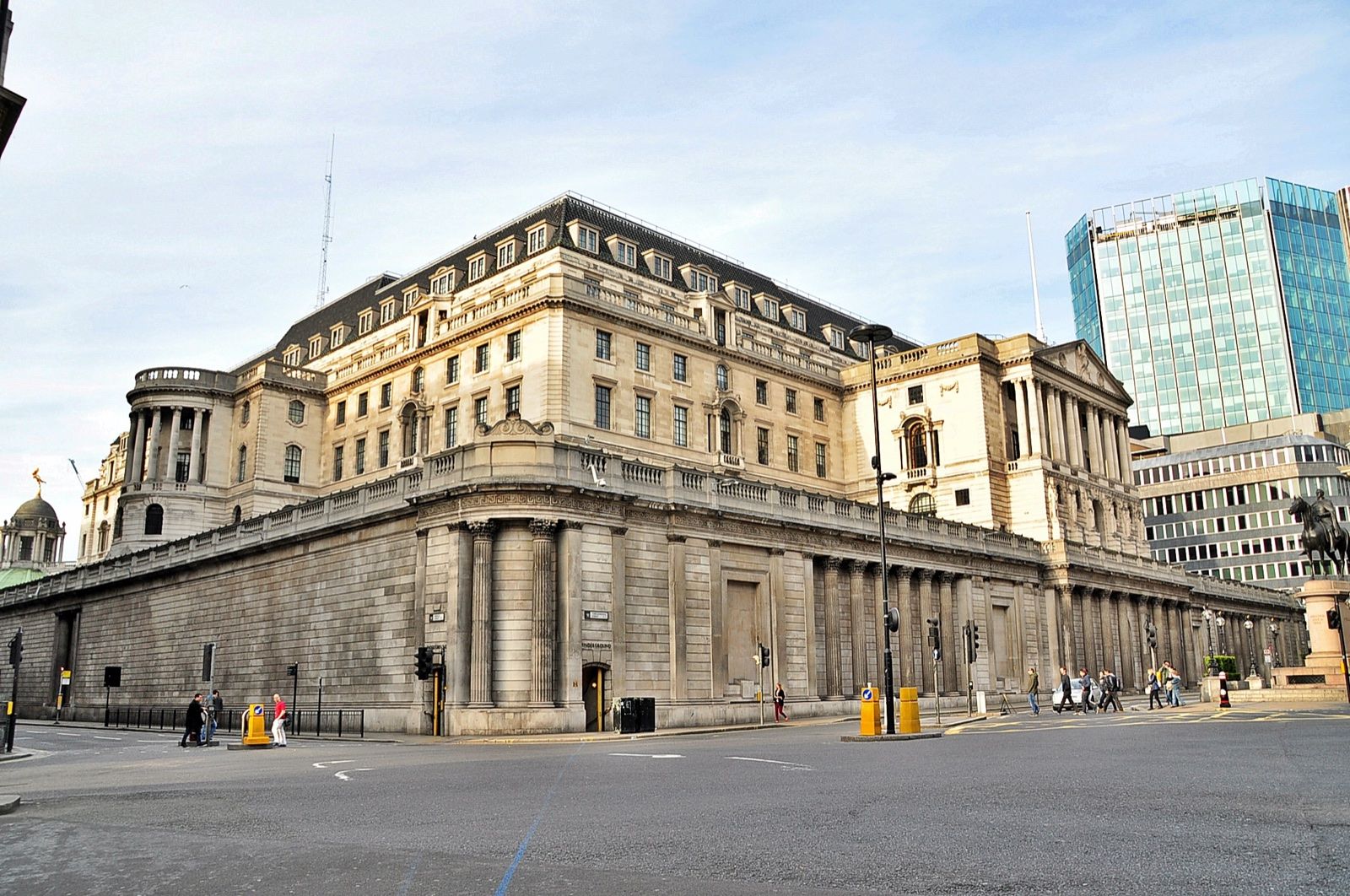
The Bank of England has raised interest rates to 4%. Who pays and who gains?
Why it hits youBank Rate is the number that nudges almost every other interest rate in the country. When it goes up, loans and mortgages tend to cost more and savings tend to pay more. So this decision lands differently depending on whether you owe money or have money put away. The Bank expects inflation to climb to around 5% by the middle of next year, and several of its rate-setters say more rises could follow.
The Bank of England has put interest rates up for the first time in more than three years, from 3.75% to 4%. Eight of its nine rate-setters voted for the rise; the ninth wanted to go further. Prices are rising faster again, mostly because the war involving Iran has pushed up fuel and energy costs. The Bank says a small rise now helps stop that turning into lasting inflation. Critics say borrowers are paying for a shock that higher rates can't fix.
The Facts
What everyone agrees on
Before anyone spins it. Every one of these is checkable.
-
The Bank's Monetary Policy Committee voted 8–1 to raise Bank Rate by 0.25 percentage points to 4%. The one member who disagreed, Catherine Mann, wanted a bigger rise to 4.25%. Bank of England ↗
-
It's the first time the Bank has raised rates since August 2023. Rates had been at 3.75% since a cut in December 2025. City AM ↗
-
Bank Rate is the interest the Bank of England pays banks that keep money with it. When it goes up, banks usually charge more on loans and pay more on savings. Bank of England ↗
-
Prices rose 3.5% in the year to September, up from 3.1% in August. The Bank's target is 2%. Motor fuels were the biggest reason: petrol averaged 169.5p a litre, the highest since August 2022. ONS ↗
-
The Bank now expects inflation to rise to around 5% by the middle of next year, before falling back. Bank of England ↗
-
Before today's decision, the average two-year fixed mortgage was 5.97% and the average five-year fix 5.99%, according to Moneyfacts. About 2.3 million fixed-rate deals end next year. This is Money (Daily Mail) ↗
-
Plan 2 student loan interest is set each September using RPI inflation from the previous March, plus up to 3% depending on income. A cap kicks in only if comparable market rates fall below that. GOV.UK ↗
-
In September the best five-year fixed savings bonds were paying 5.25%, and the average one-year fixed bond 4.41%. The Guardian ↗
Every Side · 1 of 3
The Bank and those backing a rise
Act now, before a fuel shock turns into lasting inflation
The Bank's worry is “second-round effects”: higher fuel and energy bills leading workers to ask for bigger pay rises and firms to put up prices across the board. Governor Andrew Bailey said that unless there is real progress towards ending the conflict, “risks to energy prices, and so to inflation, are to the upside”, and “the case is clear for a 25-basis point rise now”. One member, Catherine Mann, wanted a bigger rise, to 4.25%. Before the decision, Ellie Henderson of the bank Investec said: “We imagine that many committee members’ patience with the recent rise in inflation has worn thin.” Mail on Sunday columnist Hamish McRae wrote that “there have to be higher interest rates, maybe much higher”. Savers stand to gain: Rachel Springall of Moneyfacts expected deals for savers “to get even better”.
- Andrew Bailey, Bank of England governor
- Catherine Mann, MPC member
- Ellie Henderson, Investec
- Hamish McRae, Mail on Sunday
Side labels are our editorial calls for now. How we'll rate lean
Every Side · 2 of 3
Economists and campaigners worried about borrowers
“Raising interest rates cannot produce more oil or gas”
That's Martin Beck, chief economist at the consultancy WPI, who added that “further tightening risks weakening an already fragile economy.” The New Economics Foundation, a left-leaning think tank, argued the government should cut the cost of energy, rent and transport directly instead, because rate rises “would otherwise be passed on to people paying mortgages and rents”. Rachel Springall of Moneyfacts called three-year-high fixed mortgage rates “disastrous news for borrowers”. Even inside the Bank, Swati Dhingra noted that “the combined drag from energy prices and higher mortgage rates continues to weigh on real disposable incomes”, and Alan Taylor called this a “one-for-now” insurance rise, “not the start of a hiking cycle”.
- Martin Beck, WPI
- New Economics Foundation
- Rachel Springall, Moneyfacts
- Swati Dhingra and Alan Taylor, MPC members
Side labels are our editorial calls for now. How we'll rate lean
Every Side · 3 of 3
What it means for you
It depends on whether you borrow, save, rent or have a student loan
Mortgages: if your rate “tracks” Bank Rate, it goes up almost straight away. If it's fixed, nothing changes until the deal ends, but about 2.3 million fixed deals end next year. First-time buyers face average two- and five-year fixes of about 6%, though lenders had already priced much of today's rise in. Renters: there's no direct link, but campaigners argue landlords with mortgages pass costs on. Loans, car finance and credit cards: new borrowing tends to get dearer. Savings: rates tend to rise, but from April 2027 the tax on savings interest goes up. Student loans: Plan 2 and Plan 5 interest is set using RPI inflation, not Bank Rate, so today's decision doesn't change it. Older Plan 1 loans are the exception: their rate is RPI or Bank Rate plus 1%, whichever is lower. Chancellor John Healey said: “The Iran conflict is reaching deep into the pockets of families and businesses here at home.” He pointed to his budget's £100 energy payment for 20 million households, the cut in tax on electricity bills and the fuel duty freeze.
- Bank of England
- GOV.UK (Student Loans Company)
- Moneyfacts
- UK Finance
- John Healey, Chancellor
Side labels are our editorial calls for now. How we'll rate lean
The Blindspot · what the headlines skip
Rate rises split the generations
Higher rates reward people with savings and cost people who borrow. Wealth builds up with age: households headed by someone aged 55 to State Pension age have about 25 times the median wealth of those headed by 16 to 24-year-olds. So a rise tends to help older savers and squeeze younger borrowers, renters and first-time buyers. Neither side's headline argument spends much time on that.
The Blindspot · what the headlines skip
Supporters skip how blunt the tool is
The Bank's own minutes admit that “monetary policy could not influence global energy prices”. A rate rise doesn't make petrol cheaper. It works by cooling spending and pay demands, and it takes time. Mail on Sunday columnist Hamish McRae, who backs higher rates, also points out that most mortgages are fixed, so rate changes “only affect people when their fixes expire”.
The Blindspot · what the headlines skip
Critics skip that mortgages rose before the Bank moved
Fixed mortgage rates hit 6% in October while Bank Rate was still 3.75%, because lenders' own borrowing costs had already jumped on fears of inflation. In the days before the decision, several big lenders actually cut fixed rates because the rise was already priced in. Keeping Bank Rate on hold wouldn't by itself have made borrowing cheap.
Your Call
- The Bank and those backing a rise: not yet
- Economists and campaigners worried about borrowers: not yet
- What it means for you: not yet
Only you can see this. It's saved on this device and never sent anywhere.
Receipts
Every source, one tap away
Don't take our word for it. This is everything the breakdown is built on.
By No Glaze News · published