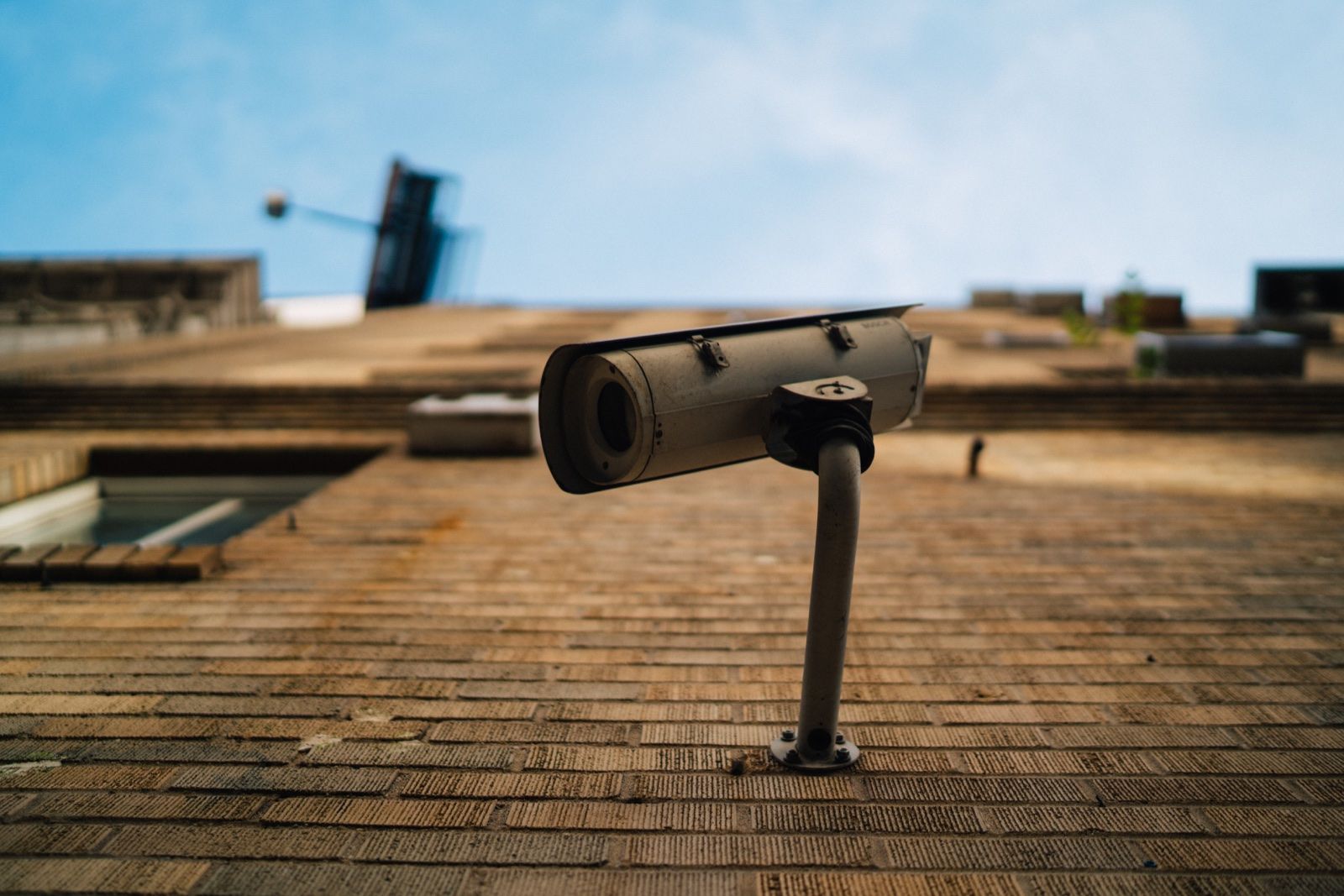
US students sue after an AI school camera mistook a Doritos bag for a gun
Why it hits youMore schools are using AI to watch their CCTV cameras for weapons. Supporters say it's an extra layer of safety, with humans checking every alert. Critics say a false alarm can put a young person in front of armed police for doing nothing wrong. Facial recognition has already turned up in UK schools, and the law here is strict: in 2024 the data watchdog, the ICO, reprimanded an Essex school that started using facial recognition in its canteen without checking the risks first or getting proper permission from pupils.
In October 2025, an AI camera system at Kenwood High School near Baltimore, in the US state of Maryland, flagged a student as possibly carrying a gun. He was holding a bag of Doritos. Police arrived with guns drawn and handcuffed teenagers waiting for a lift home after football practice. Now four current and former students are suing the company behind the system, Omnilert, as well as the police, the school board, officers and the principal. The students and their lawyers say both the technology and the adults failed them. The company and the school district say the system did its job: it spotted a possible threat and passed it to humans to check.
The Facts
What everyone agrees on
Before anyone spins it. Every one of these is checkable.
-
Four current and former students at a Maryland high school have sued Omnilert, Baltimore County police, the board of education, individual officers and the school principal over the October 2025 incident. The Guardian ↗
-
The students accuse the defendants of unreasonable search and seizure, false arrest, false imprisonment and negligence. They want unspecified damages and a court order stopping the schools using Omnilert until training and protocols improve. CBS News Baltimore ↗
-
According to the complaint, Omnilert's system flagged the crisp packet as a gun with 90% confidence on the evening of 20 October 2025, after football practice. The Guardian ↗
-
School officials' timeline: the alert came at 7.04pm, safety staff cancelled it by 7.06pm, the principal reported it to a school resource officer at 7.17pm, and police arrived at 7.23pm. The Baltimore Banner ↗
-
Maryland's Office of the Inspector General for Education found the system did not show bias, and that the perceived threat was the student's hand position, not the bag. It recommended more training and a review of how many people get alerts. The Baltimore Banner ↗
-
Baltimore County Public Schools has a three-year, $2.6 million contract with Omnilert that ends in 2027. The system scans 9,500 school cameras, and fewer than 1% of its alerts needed police to be told, according to the inspector general. The Baltimore Banner ↗
-
Weeks later, in November 2025, another Omnilert alert sent police to Parkville High School in Baltimore County. Students were moved while the school was searched, and no threat was found. CBS News Baltimore ↗
-
In the UK, the ICO reprimanded Chelmer Valley High School in Essex in July 2024 for using facial recognition for canteen payments without first doing a data protection impact assessment or getting proper consent. ICO ↗
Every Side · 1 of 3
The students, their families and civil-liberties critics
“Instead of this protection, they were met with guns and traumatized”
That's Damon Hewitt of the Lawyers' Committee for Civil Rights Under Law, which is representing the four students. He said they “were failed not only by a technology that is prone to false alerts, but also by the very adults meant to keep them safe”. The lawsuit says the students “were in shock and feared for their lives after being stopped, ordered to their knees, handcuffed and searched”. Taki Allen, who was 16 at the time, described it back then: “They made me get on my knees, put my hands behind my back, and cuffed me.” He told Fox45 News: “I didn't feel like the school actually cared about me. Because nobody came up to me after, not even the principal.” Freida Winfield, whose son Keith is part of the case, said: “No child in Baltimore county should face this kind of danger while waiting outside his own school for a ride home from his mother.” Jay Stanley of the American Civil Liberties Union (ACLU) said: “Humans should have been in the loop here — before police were deployed, guns drawn — and recognized a Doritos bag when they saw one.” Local councillor Julian Jones asked: “How did it come to be that we had police officers with guns drawn approaching a kid because of a bag of Doritos?”
- Damon Hewitt, Lawyers' Committee for Civil Rights Under Law
- Taki Allen, student
- Freida Winfield, parent
- Jay Stanley, ACLU
- Julian Jones, Baltimore County councilman
Side labels are our editorial calls for now. How we'll rate lean
Every Side · 2 of 3
What it means for you
The tech is spreading faster than the proof that it works
How it works: AI software scans a school's existing CCTV for anything that looks like a gun, then sends an alert to people who check it. In Baltimore County, staff cancelled this alert within about two minutes, but the principal didn't see the cancellation and reported it to a school police officer, who called in local police. A state watchdog found the AI hadn't reacted to the crisp packet itself, but to the way the student's hand was held. Experts say nobody really knows how well these systems work in real schools. Beidi Dong, a criminology professor at George Mason University, said the algorithms work well in theory, but “we don't know yet how successful or valid” they are in the real world. Juan Gilbert, a computer scientist at the University of Florida, asked: “What happens if there is a false positive? What resources are deployed? What is the protocol?” In the UK: schools using face scanning or other biometric tech must follow data protection law. The ICO's Lynne Currie said bringing in this kind of tech “should not be taken lightly, particularly when it involves children”. In that Essex case, the ICO said most pupils were old enough to give their own consent, so a letter letting parents opt their children out wasn't enough.
- Beidi Dong, George Mason University
- Juan Gilbert, University of Florida
- Lynne Currie, Information Commissioner's Office
Side labels are our editorial calls for now. How we'll rate lean
Every Side · 3 of 3
The company and the school district
“The program did what it was supposed to do”
That's Myriam Rogers, who was in charge of Baltimore County's schools at the time. She said the system's job was “to signal an alert and for humans to take a look to find out if there was cause for concern at that moment”, and that “humans have to verify” before police respond. Omnilert said the image sent to its staff closely resembled a gun, and that “the system operated as designed — detecting a possible threat, routing it for human review, and ensuring rapid, informed decision-making.” Back in 2025 it said: “We regret that this incident occurred and wish to convey our concern to the student and the wider community affected by the events that followed.” It added that its technology “is one layer of a comprehensive security strategy that always includes human oversight and other safeguards.” On the lawsuit, an Omnilert spokesperson told the Baltimore Banner the company was “truly sorry for the fear they and their families experienced. We understand why they want answers.” The school district says it can't comment on a case that's still going. After a state report last year found no sign the AI was racially biased, the district said: “BCPS will adopt the report’s recommendations,” and that all its administrators had been retrained.
- Myriam Rogers, then-superintendent, Baltimore County Public Schools
- Omnilert
- Baltimore County Public Schools
Side labels are our editorial calls for now. How we'll rate lean
The Blindspot · what the headlines skip
Defenders say less about how often it's wrong
The company and district stress that humans check every alert. But the lawsuit says the state inspector general found “more than 99% of OGD Alerts in Baltimore County Public Schools were false positives that required no police response”. The inspector general's own report, as described by the Banner, says thousands of alerts went to staff and fewer than 1% needed police.
The Blindspot · what the headlines skip
Critics of the AI say less about the human mistake
Much of the anger is aimed at the software. But school staff checked and cancelled the alert within about two minutes. Police were called because the principal missed the cancellation. Even the ACLU's Jay Stanley said “the blame here lies not with the technology but with the human beings and institutions” around it.
The Blindspot · what the headlines skip
Nobody has strong proof it stops shootings
Undark, a science magazine, found there do not appear to be any independent, peer-reviewed studies on whether commercial AI weapons detection works in schools. Omnilert's system was also running at Antioch High School in Nashville when a student opened fire in January 2025; the gun wasn't in view of the cameras.
Your Call
- The students, their families and civil-liberties critics: not yet
- What it means for you: not yet
- The company and the school district: not yet
Only you can see this. It's saved on this device and never sent anywhere.
Receipts
Every source, one tap away
Don't take our word for it. This is everything the breakdown is built on.
By No Glaze News · published