What actually is the Budget? The 2-minute explainer
Why it hits youThe Budget decides how much tax comes off your wages, what you pay back on a student loan, the price of a pint and how much the government borrows in your name. You don't need to own a house for it to affect you.
Once a year, the Chancellor stands up in Parliament and sets out who pays what tax and how the country covers its bills. Here's how it works, where the money comes from and goes, and why it reaches your payslip.
The Facts
What everyone agrees on
Before anyone spins it. Every one of these is checkable.
-
The Budget is when the government sets out new taxes and changes to existing ones, plus welfare policies, in a speech by the Chancellor to the House of Commons. It also gives an overview of the state of the UK economy. Institute for Government ↗
-
There has to be a Budget every financial year, because two big taxes, income tax and corporation tax, are technically temporary and must be approved again each year. Institute for Government ↗
-
Since 2016 the main Budget has been held in the autumn, with a smaller update in the spring. Institute for Government ↗
-
This year's Budget is on Wednesday 28 October, Chancellor John Healey's first. He speaks at about 12.30pm, straight after Prime Minister's Questions. The Independent ↗
-
On the same day, the independent Office for Budget Responsibility publishes a five-year forecast for the economy and the public finances that includes the Budget's changes, and says whether the government is on track to meet its own borrowing rules. Office for Budget Responsibility ↗
-
Money in: the government expected to raise £1,235 billion in 2025-26, about £43,000 per household. Income tax and National Insurance bring in around £535 billion together, and VAT £181 billion. Office for Budget Responsibility ↗
-
Money out: spending was expected to be £1,368 billion in 2025-26. The biggest items include welfare (£333 billion), health (£204 billion), interest on the national debt (£110 billion), education (£95 billion) and defence (£39 billion). Office for Budget Responsibility ↗
-
The gap is borrowed: a deficit of £133 billion was expected in 2025-26. The national debt is around £2.9 trillion, about 94% of the size of the whole economy. Office for Budget Responsibility ↗
-
Some changes, like duty on alcohol, can start on Budget day itself after one vote. Other tax changes need MPs' approval within 10 sitting days, and the whole package becomes law through a Finance Bill, which must pass within seven months. The House of Lords is not expected to change it. Institute for Government ↗
-
Where it hits your pay: you pay no income tax on the first £12,570 you earn a year, then 20% up to £50,270. National Insurance takes 8% of weekly earnings between £242 and £967. GOV.UK ↗
-
If you have a Plan 5 student loan, you repay 9% of whatever you earn over £25,000 a year. GOV.UK ↗
Every Side · 1 of 3
The left's view
Make the wealthy and the banks pay more, and invest in services
The left argues the Budget should raise more from those who can most afford it to pay for public services. Ahead of this Budget, the TUC backed reversing a cut to the extra tax banks pay on their profits, which it says would raise £2.25 billion a year, and called for an even bigger rise. TUC general secretary Paul Nowak said it was “time to make sure banks pay their fair share.” Unions and left-leaning think tanks have also called for taxes on wealth.
- Trades Union Congress (TUC)
- Left-leaning think tanks
What do “left” and “right” mean?
They're shorthand for two broad sets of political views. People on the left tend to put more weight on equality and on government stepping in to fix problems. People on the right tend to put more weight on tradition, personal freedom and keeping government smaller. The centre sits in between, and most people mix views from all three.
Side labels are our editorial calls for now. How we'll rate lean
Every Side · 2 of 3
The right's view
Spend less, tax less, keep it simple
The right argues taxes are already too high and the government should control spending instead. The free-market Institute of Economic Affairs has published its own “Alternative Budget” built on “simpler taxes and spending restraint”: tax spending rather than earning, by charging VAT on more things, and scrap stamp duty and inheritance tax. The Conservatives say families are already “hammered” by tax rises.
- Institute of Economic Affairs
- The Conservatives
Side labels are our editorial calls for now. How we'll rate lean
Every Side · 3 of 3
The referees' view
Whatever you choose, the sums have to add up
Independent experts care less about which taxes go up or down and more about whether the numbers work. The Office for Budget Responsibility, the government's independent forecaster, checks every Budget against the Chancellor's own rules: day-to-day spending should be paid for by taxes, not borrowing, and debt should be falling as a share of the economy. When the rules were last formally checked, they were met by only around £22 to £24 billion, a thin margin in a budget of over £1.3 trillion.
- Office for Budget Responsibility
- Institute for Government
- Institute for Fiscal Studies
Side labels are our editorial calls for now. How we'll rate lean
The Blindspot · what the headlines skip
Interest on the national debt costs more than the armed forces
About £110 billion a year goes on interest payments on what the country has already borrowed. That's nearly three times the day-to-day defence budget, and more than all of education. Every extra pound borrowed today adds to that bill, and your generation will be paying it for decades.
The Blindspot · what the headlines skip
A tax can rise without anyone announcing a rise
If the £12,570 tax-free allowance stays frozen while wages go up, more of your pay gets taxed every year, and no rate ever has to change. It's one of the quietest ways to raise money, and it hits people on lower pay starting out hardest.
The Blindspot · what the headlines skip
The Budget is mostly about tax, not how much schools or hospitals get
Each department's spending, like health or education, is usually set for several years at a time in separate spending reviews, and Parliament approves it through a different process called the estimates. So a Budget can be big news without changing what your school or GP gets this year.
Institute for Government ↗Office for Budget Responsibility ↗
The Blindspot · what the headlines skip
Leaking the Budget once ended a career. Now it's routine
In 1947 Chancellor Hugh Dalton let slip part of his speech to a reporter, it was printed before he'd finished speaking, and he resigned the next day. Today, much of a Budget is briefed to newspapers in advance. That's why you'll see so many “expected” and “reported” headlines before the speech, and why some of them turn out to be wrong.
The Blindspot · what the headlines skip
The famous red box is mostly theatre
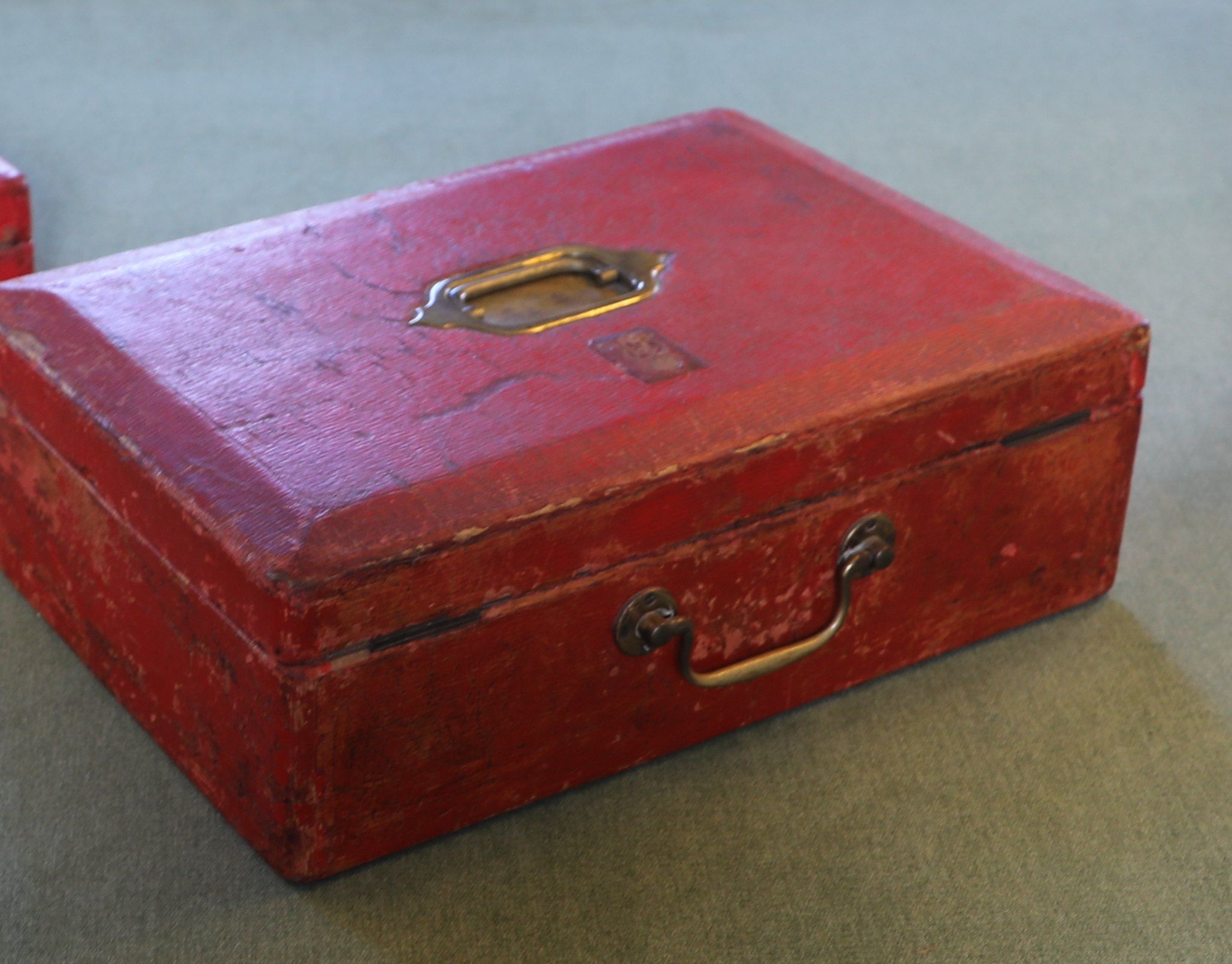
Chancellors pose outside 11 Downing Street holding up a red box. The tradition goes back to around 1860, when William Gladstone had the first official Budget box made. Chancellors kept using his original box until it was retired in 2010. The speech is inside, but the real detail is in the documents published online afterwards.
The Blindspot · what the headlines skip
Losing a Budget vote can bring down a government
Governments have lost votes on single Budget measures before, like a plan to raise VAT on fuel in 1994, and survived. But a defeat on a big money-raising measure could now be treated as a vote of no confidence, which is why governments rarely risk one.
Your Call
- The left's view: not yet
- The right's view: not yet
- The referees' view: not yet
Only you can see this. It's saved on this device and never sent anywhere.
Receipts
Every source, one tap away
Don't take our word for it. This is everything the breakdown is built on.
Hero image: File photo: Geni / Wikimedia Commons, CC BY-SA 4.0 (cropped) · Red ministerial box, Leeds Castle ↗
By No Glaze News · published
Next story The £1,999 iPhone Duo is here. Should you actually buy it?