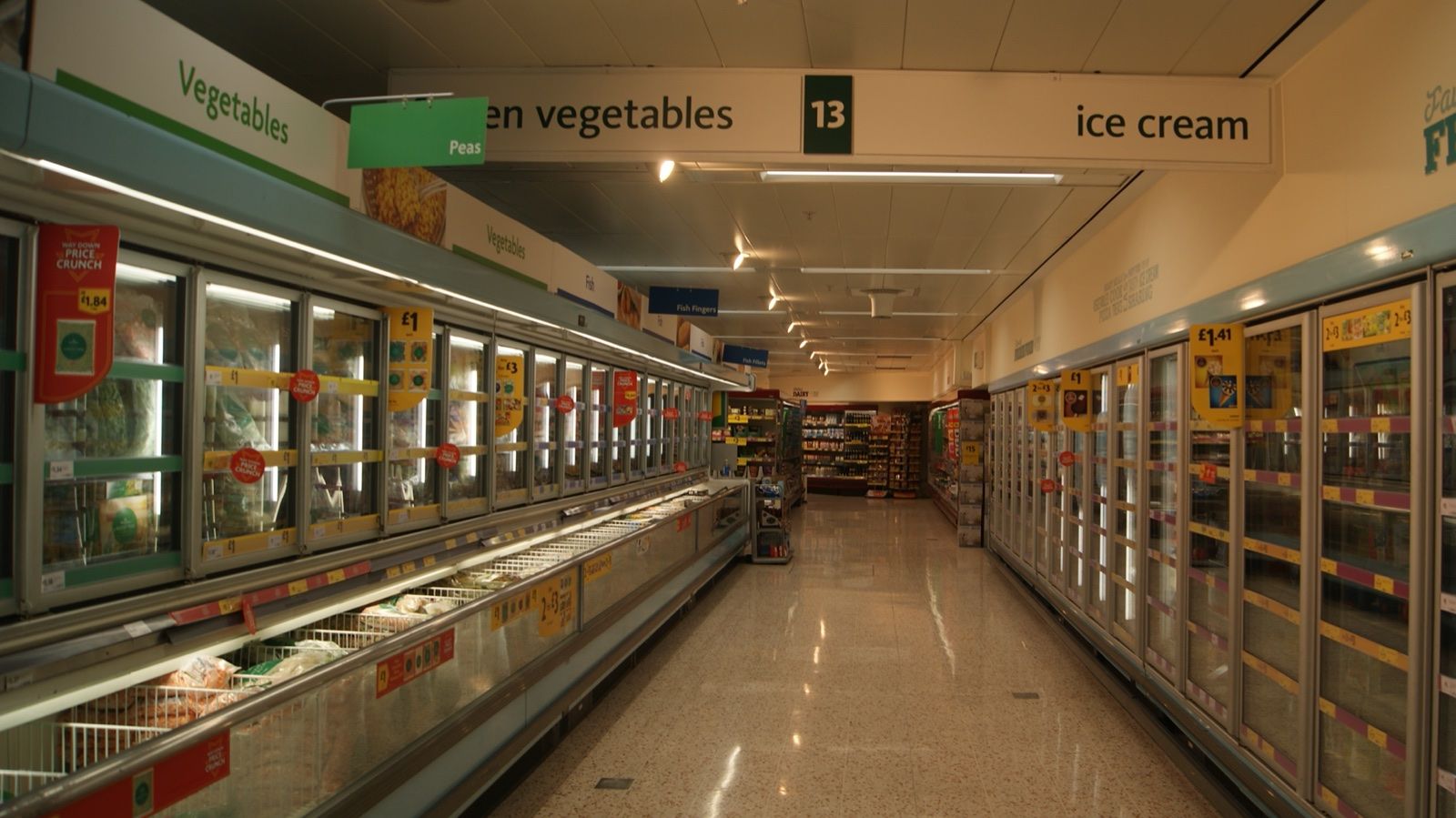
Hackers keep heating up Europe's supermarket fridges. A few UK firms got hit
Why it hits youNo big UK supermarket has been hit, and the UK's cyber security agency says the impact here is “minimal”. But the way in was simple: old kit plugged into the internet, often still using the password it came with. Your smart TV, doorbell or speaker can have the same weak spot, and the fix is the same too: change the default password and keep it updated.
Someone is breaking into the computer systems that run shop fridges and freezers and turning the temperature up, in some cases to 50C. It started in France last month. On Monday it hit supermarkets in at least 11 European countries, forcing them to bin tonnes of food. A handful of UK meat suppliers were hit too, but none lost any meat. Nobody has claimed it, and UK officials say it's too early to say who did it.
The Facts
What everyone agrees on
Before anyone spins it. Every one of these is checkable.
-
On 12 October, hackers pushed fridges and freezers at hundreds of French supermarkets to as high as 50C, the Paris prosecutor's office confirming a “large-scale” attack. GB News ↗
-
On Monday 2 November a new wave hit supermarkets including Ahold Delhaize and Colruyt in Belgium and Luxembourg, ICA and Coop in Sweden, 13 SuperValu stores in Ireland and at least one IKEA. Reuters (via CNBC) ↗
-
Officials said shops in Germany, Romania and the UK were also hit, taking the number of European countries affected to at least 11. Al Jazeera ↗
-
No “hacktivist” group has claimed responsibility, and no ransomware gang has demanded money from the supermarkets. The Guardian ↗
-
A few of the roughly 300 members of the Association of Independent Meat Suppliers had their fridges heat up overnight, but the units were empty, so no meat was lost. PA (via Evening Standard) ↗
-
French investigators blamed outdated remote control modules made by Danfoss and Copeland. Danfoss said most affected systems were older products that no longer got security updates. AP (via PBS) ↗
-
The head of the NCSC said the French fridges were “connected directly to the internet with default passwords”. AP (via PBS) ↗
-
Since 29 April 2024, UK law says passwords on consumer smart products must be unique to each product or set by the user, and makers must publish how long they'll provide security updates. GOV.UK ↗
Every Side · 1 of 3
Governments and security officials
The EU calls it “a deliberate attempt to disrupt our food supply chain”
That's how the EU's agriculture commissioner, Christophe Hansen, described the attacks, calling them “a warning that we must take seriously”. An EU spokesperson, Thomas Regnier, said: “These are not isolated incidents.” In the UK, Dr Richard Horne, head of the National Cyber Security Centre (NCSC), said the French fridges were “connected directly to the internet with default passwords”. His team worked through the night warning UK firms with exposed kit. The NCSC's Paul Chichester said the national impact was “minimal”. On who did it, Horne said: “It’s too early for us to say at the moment and give a definitive answer.” Not every official sees a big plot. Romania's cyber chief, Dan Cimpean, said it “seems semi-amateurish”, adding: “We do not suspect, under any circumstances, that it is a state actor.”
- Christophe Hansen, EU commissioner
- Dr Richard Horne, NCSC
- Dan Cimpean, Romania's cyber security directorate
Side labels are our editorial calls for now. How we'll rate lean
Every Side · 2 of 3
Retailers, suppliers and security firms
Old kit, open doors, and a rush to lock them
Graham Wynn of the British Retail Consortium said: “Retailers invest heavily in their cybersecurity and are currently working with the NCSC to ensure their fridges and freezers are secure as possible against potential attacks.” The Association of Independent Meat Suppliers said: “None who have been affected have lost any meat.” Danfoss, which makes some of the controls that were hacked, said most affected systems were older products that no longer got security updates. Sweden's Coop is moving its fridges onto newer networks: “This helps to solve a large share of problems of this kind.” Security firms say it wasn't clever hacking. Nicole Carignan of Darktrace said: “They got in through internet-facing controllers, end-of-life firmware, and default passwords. That is technical debt coming due.” On who did it, Rafe Pilling of Sophos said the two most likely options were “some kind of state-based signalling and demonstration of capability or some kind of lone-wolf hacker”.
- British Retail Consortium
- Association of Independent Meat Suppliers
- Danfoss
- Darktrace
- Sophos
Side labels are our editorial calls for now. How we'll rate lean
Every Side · 3 of 3
What it means for you
Your shop is fine. Check your own gadgets
No major UK supermarket chain is understood to have been hit, so there's no sign of empty shelves here. The hack worked because shop fridges are run by small computers that are online so engineers can check them remotely. As one professor put it: “A fridge doesn't look like a security risk, and that's exactly why attackers like it.” The same goes for smart speakers, cameras and doorbells at home. The NCSC's advice: “If the device comes with a default password, change it.” Use three random words. Turn on automatic updates and two-step verification if you can, and switch off remote access if you don't need it. Since April 2024, UK law says new consumer smart products can't come with easy-to-guess default passwords, and makers must say how long they'll get security updates. The NCSC says to treat that date like a “use by” date.
- NCSC
- Katerina Mitrokotsa, University of St. Gallen
- GOV.UK (PSTI law)
Side labels are our editorial calls for now. How we'll rate lean
The Blindspot · what the headlines skip
Officials send mixed signals
The NCSC says the UK impact is “minimal”, but when Horne was asked if the attack backed up the Defence Secretary's warnings that people should stockpile, he said: “Absolutely.” And while the EU calls it a “deliberate attempt” to disrupt food supplies, Romania's cyber chief called it “semi-amateurish”.
The Blindspot · what the headlines skip
Investing heavily, but still exposed
Researchers have found more than 800 fridge control panels linked to British retailers that can be reached over the open internet, though that doesn't mean they can all be hacked. Danfoss says it had “long advised” customers to update old systems.
The Blindspot · what the headlines skip
The password law won't fix this
The UK's ban on weak default passwords covers consumer smart products, like the gadgets in your home. It can't fix old shop systems that have already stopped getting updates.
Your Call
- Governments and security officials: not yet
- Retailers, suppliers and security firms: not yet
- What it means for you: not yet
Only you can see this. It's saved on this device and never sent anywhere.
Receipts
Every source, one tap away
Don't take our word for it. This is everything the breakdown is built on.
By No Glaze News · published