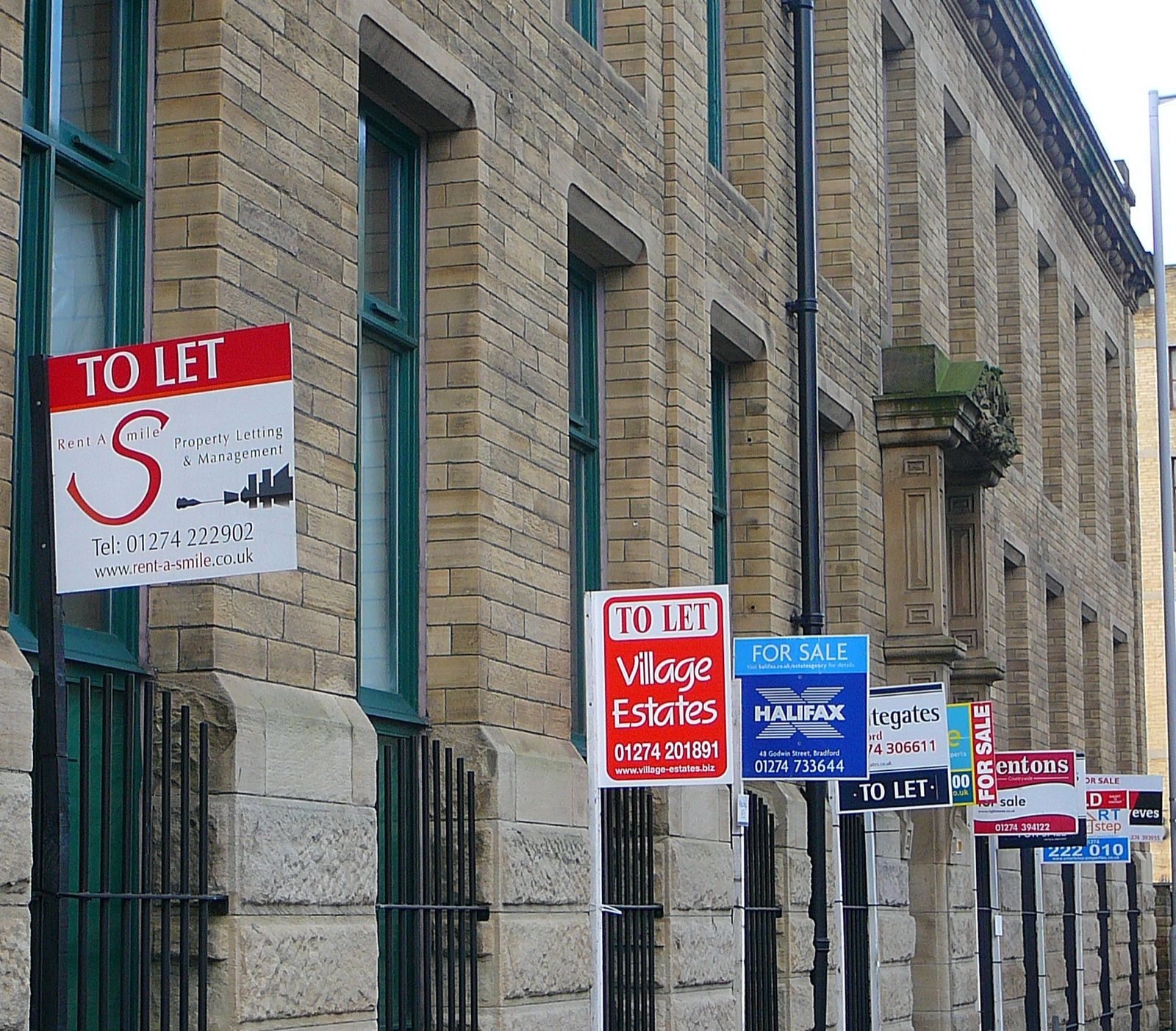
Rents forecast to rise twice as fast as house prices. What it means for renters
Why it hits youIf you're at uni, starting your first job or about to move out, rent is likely to be your biggest bill. The average UK rent is already £1,411 a month, and £1,145 for a one-bedroom home. A forecast isn't a promise. But if this one is right, rent on a new let that costs £1,000 a month today would cost about £1,142 by 2029.
Rents on newly agreed lets in Great Britain will rise by 14.2% between 2026 and 2029, about twice as fast as house prices, according to a forecast from the estate agent Hamptons. It blames a shortage of homes to rent, as landlords face higher taxes, higher mortgage costs and new rules. Landlords say tax rises are pushing them out. Renters' groups want limits on rent rises. And some other figures suggest the shortage is less clear-cut than it sounds.
The Facts
What everyone agrees on
Before anyone spins it. Every one of these is checkable.
-
Estate agent Hamptons forecasts that rents on newly agreed lets in Great Britain will rise 14.2% between 2026 and 2029, compared with 7.2% for house prices. The Guardian ↗
-
Hamptons expects rent growth on new lets to peak at 4.5% in 2027, then slow to 3.5% in 2028 and 2.5% in 2029. Across all tenancies, including existing ones, it forecasts a rise of 10.9% by 2029. Property Industry Eye ↗
-
Hamptons says the number of rental homes available in October was 26% lower than a decade earlier, and 39% lower in London, while 10% more people were looking to rent than a year before. The Guardian ↗
-
Official figures put the average UK private rent at £1,411 a month in October 2026, up 3.8% in a year. Rents rose 4.0% in England (to £1,472), 3.9% in Wales (£849) and 0.7% in Scotland (£1,015). ONS ↗
-
In England, rents rose fastest in the North West (5.6%) and slowest in the South West (3.3%). London is the most expensive region at £2,350 a month; the North East is the cheapest at £793. Mortgage Solutions ↗
-
The average UK rent for a one-bedroom home was £1,145 a month in October 2026. ONS ↗
-
Landlords made up 10.1% of home purchases in Great Britain so far this year, the lowest share since Hamptons began collecting the data in 2010, down from 15.7% in 2015. Property Industry Eye ↗
-
Under the Renters' Rights Act, in force in England since May 2026, landlords can raise rent only once a year, with at least two months' notice, and tenants can challenge a rise at the First-tier Tribunal. GOV.UK ↗
Every Side · 1 of 3
Renters' groups
Renters already pay more than they can afford. Limit the rises
Nye Jones of the campaign group Generation Rent said that “in many places, renters are already paying way, way more than they can afford on rent. We need to look at how we can reduce the relative cost of rent over time.” Renters' groups want the government to set controls on rent increases across the country. Since May, it has been easier for tenants in England to challenge a rent rise at a tribunal, but the tribunal only checks whether the new rent matches the local market. Jae Vail of the London Renters Union called that “a really inefficient case-by-case form of rent control. So why not have the version that would actually protect everyone?” Generation Rent also points out that the housing benefit for private renters, called Local Housing Allowance, has been frozen since April 2024. It says rents have risen by more than 23% since then, and fewer than 3% of advertised lets in Britain are affordable for people on it. Its chief executive, Holly Williamson, called the freeze “hugely disappointing”.
- Nye Jones, Generation Rent
- Jae Vail, London Renters Union
- Holly Williamson, Generation Rent
Side labels are our editorial calls for now. How we'll rate lean
Every Side · 2 of 3
Landlords and the property industry
Taxes and rules are shrinking the supply of homes to rent
Aneisha Beveridge, head of research at Hamptons, said: “The central challenge facing the rental market is increasingly one of supply. Higher mortgage and tax costs, alongside a more demanding regulatory environment, are making new buy-to-let investment harder to justify.” Hamptons says landlords made up just 10.1% of home purchases this year, the lowest since it started counting in 2010. It works out that tax changes over the past decade cost about £900 per tenancy in England each year, and the tax on landlords' rental income goes up again by four percentage points from April 2027. Ben Beadle, chief executive of the National Residential Landlords Association, said: “The mind boggles as to how anyone can think a mix of higher taxes forcing rents up and supply down, combined with frozen housing benefit rates helps anyone.” He added: “Successive Conservative and Labour governments have hiked taxes on rented housing year after year, and politicians would do well to look at themselves when considering why housing is so expensive.” London estate agent Jeremy Leaf said the delayed start of the government's Your First Home scheme “has deterred aspiring first-time buyers, who can now save for longer, but the net result is further upward pressure on rents.”
- Aneisha Beveridge, Hamptons
- Ben Beadle, National Residential Landlords Association
- Jeremy Leaf, estate agent
Side labels are our editorial calls for now. How we'll rate lean
Every Side · 3 of 3
What it means for you
Your rights on rent rises, and when buying might cost less
These rules are for most private renters in England (Scotland, Wales and Northern Ireland have their own). Your landlord can only put your rent up once a year, and not in the first year of your tenancy. They must give you at least two months' notice using an official form called a section 13 notice (form 4A). If you think the new rent is above the going rate for similar homes, you can challenge it at a tribunal. It costs £47 to apply. The tribunal can't set a rent higher than your landlord asked for. But it looks at market rents, not whether you can afford it. When you're looking for a place, the advert must give one fixed rent, and landlords and agents can't ask for or accept bids above it. Councils can fine them up to £7,000. The government says its Renters' Rights Act lets tenants “challenge above-market rent increases” and that “our changes are working”. Buying vs renting: Lloyds found that a mortgage with a 5% deposit would cost less each month than the average rent in seven of 12 big UK cities outside London, with the biggest saving, £288 a month, in Glasgow. In Leeds, Liverpool, Birmingham and Cardiff, renting worked out cheaper.
- GOV.UK
- Generation Rent
- Ministry of Housing, Communities and Local Government
- Lloyds
Side labels are our editorial calls for now. How we'll rate lean
The Blindspot · what the headlines skip
The shortage story skips a jump in listings
Property data firm TwentyEA says rental listings across the UK are up 10.4% so far this year, while lets agreed rose just 2.7%, and the average agreed rent rose only about 0.9%. It warns that part of the rise is student flats, build-to-rent blocks and single rooms, not ordinary homes, and that landlords are still leaving at a rate of 562 homes a day.
The Blindspot · what the headlines skip
Fewer renters may be looking, too
Hamptons says demand is up. But Generation Rent's checks of flatshare listings found the number of people looking for a room fell by 10% to 15% in five English cities, roughly matching the fall in rooms on offer. It thinks the end of “no-fault” evictions means fewer renters are being forced to move.
The Blindspot · what the headlines skip
Forecasts often change
This is a prediction, not a fact. In July 2025, Hamptons cut its rent forecast for that year from 4.5% to 1% after tenant demand fell. Its latest figures show new-let rents rising 2.6% a year now, so the forecast assumes rent growth speeds up.
Your Call
- Renters' groups: not yet
- Landlords and the property industry: not yet
- What it means for you: not yet
Only you can see this. It's saved on this device and never sent anywhere.
Receipts
Every source, one tap away
Don't take our word for it. This is everything the breakdown is built on.
By No Glaze News · published