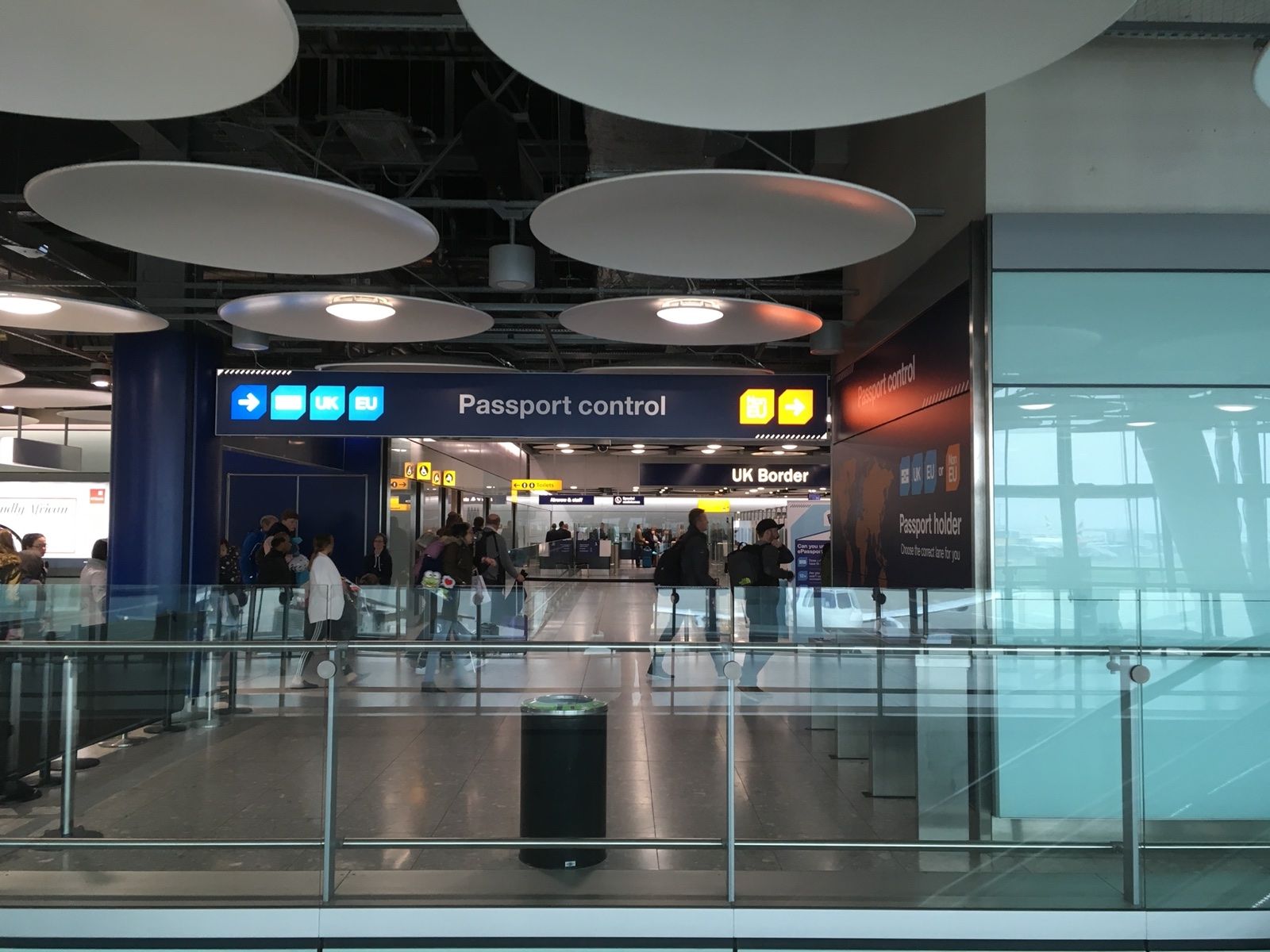
Net migration falls to 77,000, the UK's lowest in nearly 30 years outside Covid
Why it hits youMigration is one of the biggest arguments in UK politics, and this story touches young people directly. International students are now the largest group of people coming from outside the EU, and their numbers are falling, which universities say hurts their finances. Reform UK says it would scrap the graduate visa, which lets overseas students stay and work after their degree. And more young Brits are part of the story too: more British people left the UK than came back. Knowing what the 77,000 figure does and doesn't measure helps you judge the claims every side is making.
New figures from the Office for National Statistics (ONS) estimate that net migration to the UK was 77,000 in the year to June 2026. Net migration is the number of people moving to the UK for a year or more, minus the number leaving. It's less than half the year before, and the lowest since 1997 if you leave out the Covid pandemic. The main reason is that fewer people from outside the EU came to work or study. Home Secretary Shabana Mahmood says the government has “restored control”. The Conservatives and Reform UK say numbers are still too high. Universities and some economists warn the cuts are going too far.
The Facts
What everyone agrees on
Before anyone spins it. Every one of these is checkable.
-
The ONS provisionally estimates net migration at 77,000 in the year ending June 2026. That's more than half down on the year ending June 2025 (updated to 204,000), and the lowest since 1997 if you leave out the Covid pandemic. Office for National Statistics ↗
-
An estimated 738,000 people moved to the UK long term in the year to June 2026, and 661,000 left. Office for National Statistics ↗
-
Net migration peaked at 944,000 in the year ending March 2023 and has fallen since. Office for National Statistics ↗
-
Of the 550,000 people from outside the EU who came to the UK, 47% came to study, 25% for work and 13% for asylum-related reasons. Compared with a year earlier, work-related arrivals fell by 45,000, study by 33,000 and asylum by 19,000. Office for National Statistics ↗
-
About 245,000 British nationals left the UK and 109,000 arrived, so British net migration was negative 137,000. The ONS says British figures this time are projections and carry more uncertainty than usual. Office for National Statistics ↗
-
Of the 292,000 people from outside the EU who left the UK, around 53% had originally arrived on study-related visas. Office for National Statistics ↗
-
Home Office visa data shows grants to international students fell by 38% (39,200) in January to June 2026, compared with the same period in 2025. The Guardian ↗
-
In October's Budget, the government dropped a planned cut to the length of the graduate visa for students at “highly compliant” universities, the Russell Group says. Russell Group ↗
Every Side · 1 of 3
The government
“This government has restored control”
Home Secretary Shabana Mahmood said: “This government has restored control. We have brought net migration to 77,000, down 92 per cent from its peak under the previous government.” She added: “This didn’t happen by accident. It happened because this government took action. But we won't stop here.” She blamed the Conservatives for the earlier peak, saying: “The Conservatives lost control of our borders. Year upon year, they promised they would bring net migration down to the tens of thousands.” She said the government had “raised skills and salary thresholds to only attract the brightest and best and those we truly need”, and added: “Small boat crossings are down significantly, we are rapidly closing asylum hotels, and we are removing those here illegally. There is more to do.” Home Office figures show the number of asylum seekers in hotels fell to 13,185 at the end of September 2026, down 64% on a year earlier, The Independent reports.
- Shabana Mahmood, Home Secretary
Side labels are our editorial calls for now. How we'll rate lean
Every Side · 2 of 3
What it means for you
Fewer students and workers arriving, and more Brits leaving than returning
What was counted: people moving to or from the UK for 12 months or more. The ONS estimates 738,000 people moved here and 661,000 left in the year to June 2026, giving net migration of 77,000. Students: study is still the biggest reason people from outside the EU come here, at 257,000, but that was down 11% on the year before. The ONS says most non-EU people leaving had originally come to study, which “likely reflects the large number of international students who arrived in 2022 and 2023 and have since completed their studies and post-study work periods and left the UK.” Work and care: work-related arrivals fell by 25% to around 135,000. The care worker visa route closed to overseas recruits in July 2025, and visas for care worker main applicants fell by 95%, the Migration Observatory says. Young Brits abroad: about 245,000 British nationals left and 109,000 came back. The ONS's Sarah Crofts said: “In 2026, non-EU citizens are the only group driving positive net migration. EU nationals are leaving in greater numbers than are arriving, as is the case with British nationals.” The Migration Observatory at Oxford says high emigration “does not result directly from current government policy”. Sunder Katwala of the think tank British Future said the figures “will come as a surprise to most of the public, who thought immigration was still rising.”
- Office for National Statistics (Sarah Crofts)
- Migration Observatory, University of Oxford
- Sunder Katwala, British Future
Side labels are our editorial calls for now. How we'll rate lean
Every Side · 3 of 3
Critics on both sides
Some say it's still too high. Others say it's gone too far
Still too high: Shadow home secretary Chris Philp (Conservatives) said the fall was “mainly a result of changes made by the previous Conservative government”. He said: “We now need to go even further with an annual legally binding inward migration cap, set by Parliament, at far lower levels.” He also said: “British and European people are leaving in their droves because of Labour’s high taxes whilst non-EU immigration remains far too high.” Reform UK's Zia Yusuf told the Express “these figures are no cause for celebration.” He said Reform would “deport all those who came illegally and reverse the Boriswave to deliver net negative migration” (the “Boriswave” is the high immigration under Boris Johnson). Reform leader Nigel Farage posted: “It’s too hard for young people to get a job in Britain.” and “So Reform will ABOLISH the graduate visa.” In an opinion piece for GB News, Yusuf wrote: “I will say it plainly: The graduate visa is a scam on the British people created by the last Tory government.” Gone too far: Marley Morris of the think tank IPPR said the “exceptional highs following the pandemic are now firmly behind us”, but warned: “the government must make sure it doesn’t overreach.” Economist Jonathan Portes told The Independent the government is “putting up increasing barriers to international students, worsening the growing financial crisis facing universities”. Zaid Kadhum of the Russell Group of universities said: “A further fall in study visa numbers shows how several years of policy change, including the anti-growth International Student Levy, have reduced demand for UK higher education.” Lib Dem spokesperson Paul Kohler said Britain “urgently needs a proper immigration plan to support our economy and public services.”
- Chris Philp, Conservatives
- Zia Yusuf, Reform UK
- Nigel Farage, Reform UK
- Marley Morris, IPPR
- Jonathan Portes, economist
- Zaid Kadhum, Russell Group
- Paul Kohler, Liberal Democrats
Side labels are our editorial calls for now. How we'll rate lean
The Blindspot · what the headlines skip
Net migration and small boats are different things
Net migration counts everyone moving here or leaving for a year or more. The ONS says its asylum figure of 73,000 includes people who claimed asylum after arriving by routes such as small boats. Some reports, including from the AFP news agency, said the figures leave small boats out. Nigel Farage linked Brits leaving to “small boat migrants”, but The Guardian says the 217,000 small-boat arrivals since 2018 are “nowhere close” to the British net emigration figure he quoted.
Office for National Statistics ↗The Guardian (live blog) ↗NZ Herald (AFP) ↗
The Blindspot · what the headlines skip
Ministers skip that 77,000 is a first estimate
The ONS says the latest figures “are provisional and typically remain so for a year”. Based on past revisions, it says there's a 90% chance the revised figure for net migration will land between 31,000 and 128,000. Estimates for British people moving are based on an extended projection because some data was not available, so they are “subject to greater uncertainty and revision”.
The Blindspot · what the headlines skip
“Britons leaving” headlines mix up two numbers
GB News's headline said “over 130,000 Britons leave UK”. The ONS says about 245,000 British nationals left and 109,000 came back, so 137,000 is the net loss, not the total who left. The ONS also says British emigration has stayed “broadly stable in the last five years”, while the Conservatives say Brits are “leaving in their droves” because of taxes.
Your Call
- The government: not yet
- What it means for you: not yet
- Critics on both sides: not yet
Only you can see this. It's saved on this device and never sent anywhere.
Receipts
Every source, one tap away
Don't take our word for it. This is everything the breakdown is built on.
By No Glaze News · published