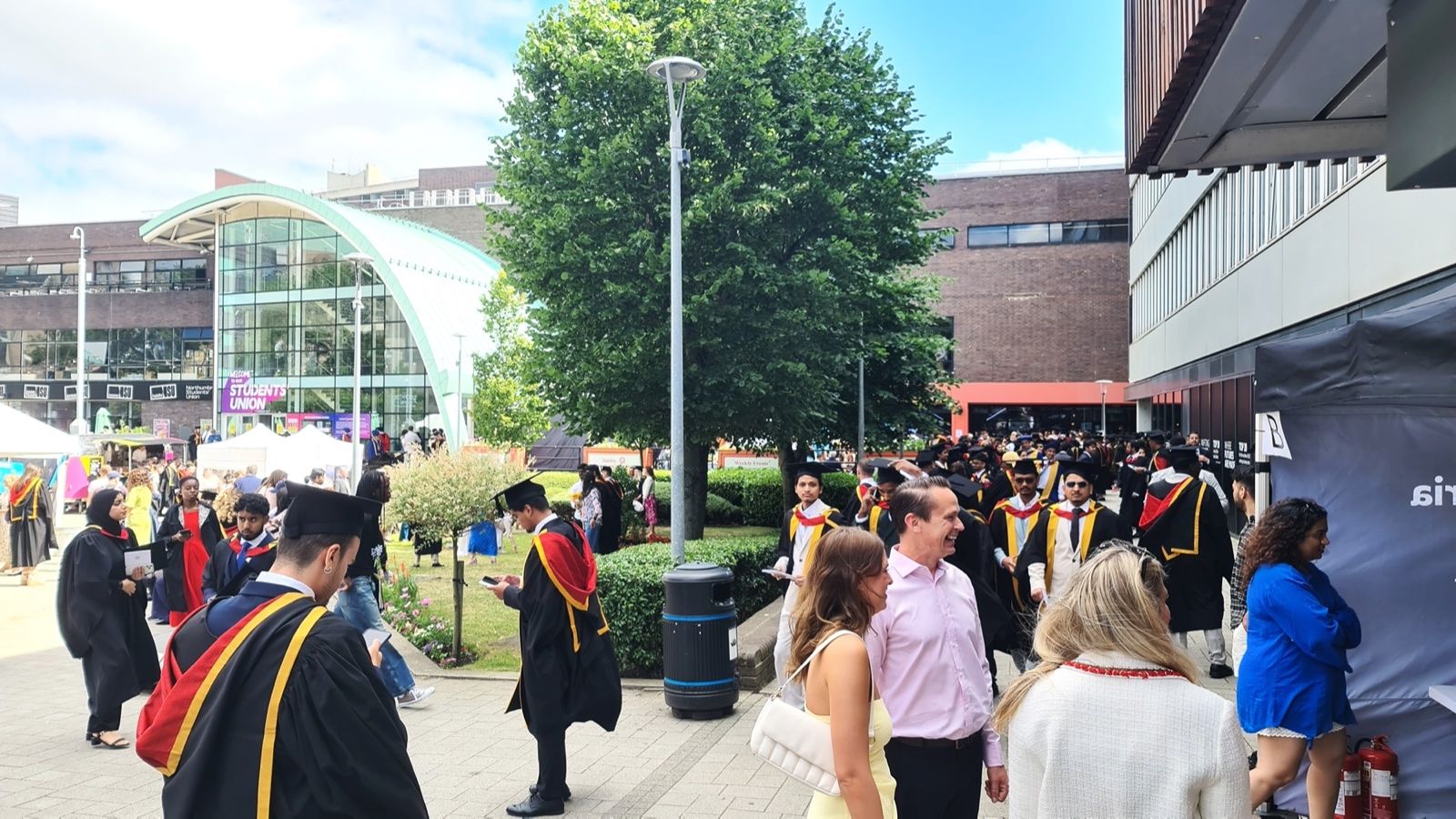
Uni fees go up again next year. So is a degree still worth the debt?
Why it hits youIf you're in sixth form or college, this is one of the biggest money decisions you'll make. The averages sound reassuring, but researchers estimate about a quarter of graduates end up financially worse off than if they hadn't gone. Which side of that line you land on depends heavily on what you study and where. And the debt rules, which you can't negotiate, affect your pay packet for decades.
University tuition fees in England rise again next August, to £10,050 a year. The average graduate who started repaying this year owed about £47,730. So is it still worth going? Universities and researchers say a degree still pays off for most people, by around £100,000 over a lifetime. Critics, including the Conservatives, say too many courses leave young people in debt with poor job prospects, and that apprenticeships deserve more respect. The honest answer: it depends a lot on the course and the uni.
The Facts
What everyone agrees on
Before anyone spins it. Every one of these is checkable.
-
Maximum tuition fees in England are £9,790 a year for 2026/27, rising to £10,050 from August 2027, at universities with a quality (TEF) award and an access plan. GOV.UK ↗
-
Plan 5 loans repay 9% of your income above £25,000 a year. Interest on Plan 5 is currently 4.1% and is added even if you earn below the threshold. GOV.UK ↗
-
Plan 5 loans are written off 40 years after the April you were first due to repay. GOV.UK ↗
-
The average higher education borrower starting repayment in 2025-26 owed £47,730 (a provisional figure, England and EU). Student Loans Company (GOV.UK) ↗
-
The IFS estimates the average graduate is about £100,000 better off over their life than a similar person without a degree, after tax and loan repayments. About 20% of women and 30% of men are likely to be worse off. Times Higher Education ↗
-
Returns vary sharply by subject: medicine and economics average more than £400,000, while creative arts, philosophy and languages show low or negative returns on average. Times Higher Education ↗
-
On A-level results day 2026, 446,690 applicants of all ages were accepted on to UK courses, up from 439,180 in 2025. The entry rate for 18-year-olds dipped slightly, from 32% to 31.6%. Times Higher Education ↗
-
There were 26,780 starts on degree-level (level 6) apprenticeships in England in 2024/25, across all ages. Department for Education ↗
Every Side · 1 of 3
Universities and researchers
“Relative to everything else, it’s still a very, very good bet”
That's Nick Hillman of the Higher Education Policy Institute think tank. He argues a tough jobs market makes a degree more useful, not less: “The more qualifications you have the more insulated you are.” Research by the Institute for Fiscal Studies (IFS) estimates the average graduate ends up about £100,000 better off than a similar person who didn't go, even after tax and loan repayments. Vivienne Stern of Universities UK said that shows “a university degree still pays off in a big way for the large majority of people”. The IFS's Kate Ogden added that the benefits aren't only about money: “It might not get you a much better job at the end of it. But it doesn’t mean you shouldn’t go and do an arts degree.”
- Higher Education Policy Institute
- Universities UK
- Institute for Fiscal Studies
Side labels are our editorial calls for now. How we'll rate lean
Every Side · 2 of 3
Conservatives and debt campaigners
Too much debt, too many “useless courses”
Conservative leader Kemi Badenoch blames the old target of getting half of young people into university: “We hit the target by creating loads of useless courses. The result is obvious: young people loaded with debt and employers complaining about basic skills gaps.” She wants to scrap what she calls “pointless courses” and fund 100,000 extra apprenticeship and training places a year for 18 to 21-year-olds. Students are already shifting: a Telegraph analysis found applications for engineering and technology up by almost 39% in five years, while applications for languages fell 13%. The Intergenerational Foundation think tank says today's loans are the toughest yet. Its author Toby Whelton called Plan 5 “a ticking timebomb”. Graduate job adverts have also fallen: one jobs site counted 8,383 in July, down 45% on a year earlier. Even the government's own skills minister, Jacqui Smith, told students: “choose carefully. Don’t walk into a degree by default.”
- Kemi Badenoch, Conservative leader
- Intergenerational Foundation
- Jacqui Smith, skills minister
Side labels are our editorial calls for now. How we'll rate lean
Every Side · 3 of 3
What it means for you
Check the course, not just the uni, and know the loan rules
If you're from England and start uni now, you're on a Plan 5 loan. You pay nothing until the April after you leave. After that you repay 9% of whatever you earn over £25,000 a year. Earn £30,000 and that's about £450 a year. Interest is set at inflation (RPI), currently 4.1%, and is added even when you earn too little to repay. Whatever's left is wiped 40 years after you start repaying. Before you pick a course, look it up on Discover Uni, the official comparison site. It shows what past students on that course earned 15 months after finishing, plus longer-term tax data on earnings by subject. As one graduate recruiter, Dan Hawes, put it: “all degrees are not equal”.
- GOV.UK
- Discover Uni
- Graduate Recruitment Bureau
Side labels are our editorial calls for now. How we'll rate lean
The Blindspot · what the headlines skip
“£100,000 better off” is an average
The headline figure hides big gaps. The same research says returns are low or negative on average for some subjects, and that roughly one in four graduates end up worse off. Two people with the same loan can get very different value from it.
The Blindspot · what the headlines skip
Apprenticeships are hard to get
Critics say apprenticeships should be the alternative, but places are limited. There were 26,780 degree-level apprenticeship starts in 2024/25 across all ages, against hundreds of thousands of university places. Even Nick Hillman, who backs university, says degree apprenticeships “are incredibly hard to come by”.
The Blindspot · what the headlines skip
Both sides judge your future from the past
The pay-off figures are based on people who went to uni years ago. The IFS says it is “not possible to know for sure” whether today's students will do as well, with AI among the unknowns. And loan rules can change after you sign: the government has frozen one loan repayment threshold for three years, which is expected to cost graduates about £300 a year.
Your Call
- Universities and researchers: not yet
- Conservatives and debt campaigners: not yet
- What it means for you: not yet
Only you can see this. It's saved on this device and never sent anywhere.
Receipts
Every source, one tap away
Don't take our word for it. This is everything the breakdown is built on.
By No Glaze News · published