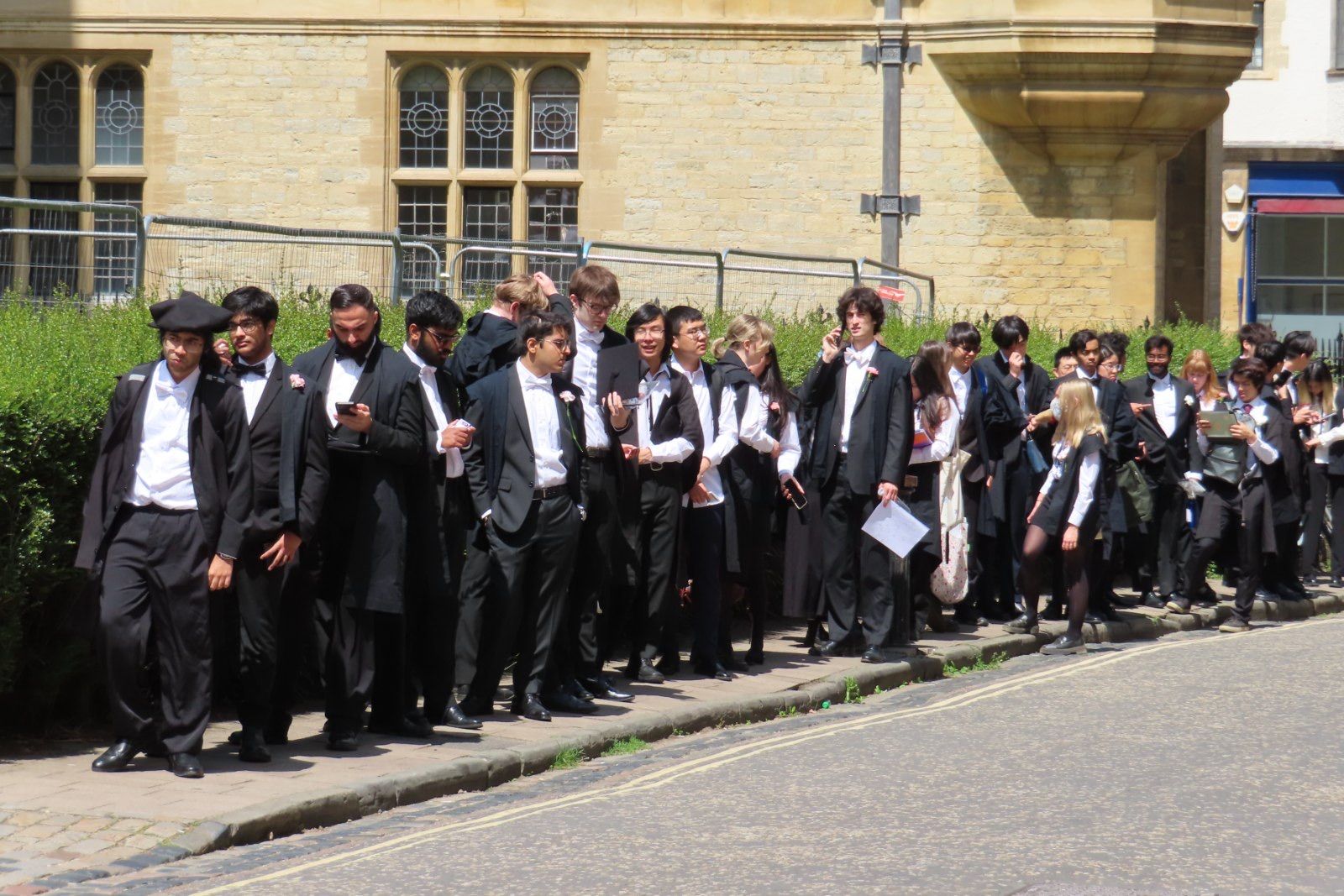
Universities pushed back towards exams as AI makes coursework hard to trust
Why it hits youIf you're at uni, or applying, the way you're marked could change: fewer take-home essays and more exams, presentations and “vivas” (spoken exams). A degree is only worth something if employers trust that it shows what you actually know. But exams suit some students far better than others, and no one has a tool that can reliably tell whether an essay was written by AI.
England's university regulator, the Office for Students (OfS), says AI is a “generational risk” to how degrees are marked. Its new report heard from students who say classmates finish assignments with AI in minutes and get the same grades as people who did the work. The OfS wants far more AI-free assessment, like sit-down exams, presentations and oral exams, and says universities that fall short could be punished. Some academics and student researchers say a rush back to exams isn't fair on everyone and won't prepare students for jobs where AI is normal.
The Facts
What everyone agrees on
Before anyone spins it. Every one of these is checkable.
-
The OfS and Advance HE, a teaching charity, spoke to more than 300 students and staff at over 120 universities and colleges between June and September 2026. Office for Students ↗
-
The OfS says it will require universities to make sure assessments are valid and reliable, and that in many cases this will mean secure (AI-free) assessment. Office for Students ↗
-
If universities fall short, the OfS can impose extra conditions, fines, or suspend access to student support funding or its own grants. Office for Students ↗
-
The OfS report says evidence suggests AI detection tools “do not consistently and reliably identify AI use”. Office for Students ↗
-
Research by the Higher Education Policy Institute think tank suggests 94% of students use generative AI in assessed work. HEPI ↗
-
The OfS says it “will not introduce new regulations”, and will use its existing powers instead. HEPI ↗
-
Freedom of information requests found 78% of UK universities were still using online exams, and most of those didn't use any remote supervision. Times Higher Education ↗
-
Schools face the same question. Ofqual, the exams regulator, has warned of “a far, far higher level of scrutiny” for any new extended-writing coursework in qualifications for 16 to 18-year-olds. Ofqual (GOV.UK) ↗
Every Side · 1 of 3
The regulator and lecturers who want exams back
“Far greater use of AI-free assessment”
Josh Fleming of the OfS said AI “presents a generational risk to the system as it stands, threatening to undermine students' learning and institutions' ability to assess them.” He wants “far greater use of AI-free assessment.” One university staff member told the researchers that “pervasive use of AI may render our assessment of students close to impossible in some areas.” A student said: “It is incredibly disconcerting when I plan and write an essay completely by myself, and get the exact same grade as someone who used AI to write it.” At Birkbeck in London, law professor Stewart Motha brought back invigilated exams. More than 45% of his students got a first, compared with 13% the year before with take-home essays. He said it was “a return to the university as a site for learning how to learn”.
- Josh Fleming, Office for Students
- Stewart Motha, Birkbeck, University of London
- Students and staff in the OfS report
Side labels are our editorial calls for now. How we'll rate lean
Every Side · 2 of 3
What it means for you
Expect more exams, vivas and showing how you did the work
The OfS isn't banning coursework, and it says it won't bring in new rules. But it expects universities to prove their marking really tests what you know. That will often mean closed-book exams, presentations, practical tasks and vivas. Some unis are trying other ideas. Bath uses a “two lane” model: either a closed, AI-free test, or a task that assumes you'll use AI. Others mark how you got there, not just the final piece, by asking how you researched and wrote it. Rules can differ from one module to the next, and the OfS found many students struggle to understand them. The student complaints watchdog says most AI cases it sees come down to “a lack of clarity over what is permitted”. So check the AI rules for each piece of work, and ask your tutor if you're unsure.
- Office for Students
- University of Bath
- Office of the Independent Adjudicator
Side labels are our editorial calls for now. How we'll rate lean
Every Side · 3 of 3
Academics, student researchers and universities
Exams aren't fair on everyone, and AI is part of work now
Annika Bautz, who leads teaching at the University of Surrey, called a return to exams an “artificial way of dealing with the problem” that “won’t prepare your students for the world of work”. Surrey now builds AI into every course instead. Professor Sam Illingworth of Edinburgh Napier University said “there’s yet to be any evidence that demonstrates that students are cheating more with AI tools than they used to.” Wonkhe research found that students with dyslexia, ADHD and similar conditions often find AI their best study support, and warned that “Blanket AI restrictions risk removing this support in the name of academic integrity”. Nicole Brownlie, an education lecturer in Australia, warns that using oral exams as an AI lie detector “may simply replace an integrity problem with a fairness problem”. Universities UK, which speaks for universities, said many have already changed, and assessments must be “AI-proof” but also “academically rigorous, fair and relevant.”
- Annika Bautz, University of Surrey
- Sam Illingworth, Edinburgh Napier University
- Wonkhe student research
- Universities UK
Side labels are our editorial calls for now. How we'll rate lean
The Blindspot · what the headlines skip
The exams-back side skips the cost
Exams need rooms, timetables and invigilators, and vivas take a lot of examiner time. One law professor thinks university bosses “discovered they saved quite a lot of time and resources in not having in-person exams” and are short of money now.
The Blindspot · what the headlines skip
The critics skip the honest students losing out now
Wonkhe's research found unclear AI rules hit the most careful students hardest. Some got lower grades for avoiding tools they weren't sure were allowed. Leaving things as they are has a fairness cost too.
The Blindspot · what the headlines skip
Few are talking about how accusations get judged
In a survey of lawyers who handle these cases, 83% disagreed that university procedures are reliable enough to protect students who have been wrongly accused. With detection tools unreliable, that matters for every student.
Your Call
- The regulator and lecturers who want exams back: not yet
- What it means for you: not yet
- Academics, student researchers and universities: not yet
Only you can see this. It's saved on this device and never sent anywhere.
Receipts
Every source, one tap away
Don't take our word for it. This is everything the breakdown is built on.
By No Glaze News · published
Next story Amazon drones can now reach 8,000 homes in Darlington. Not everyone's a fan