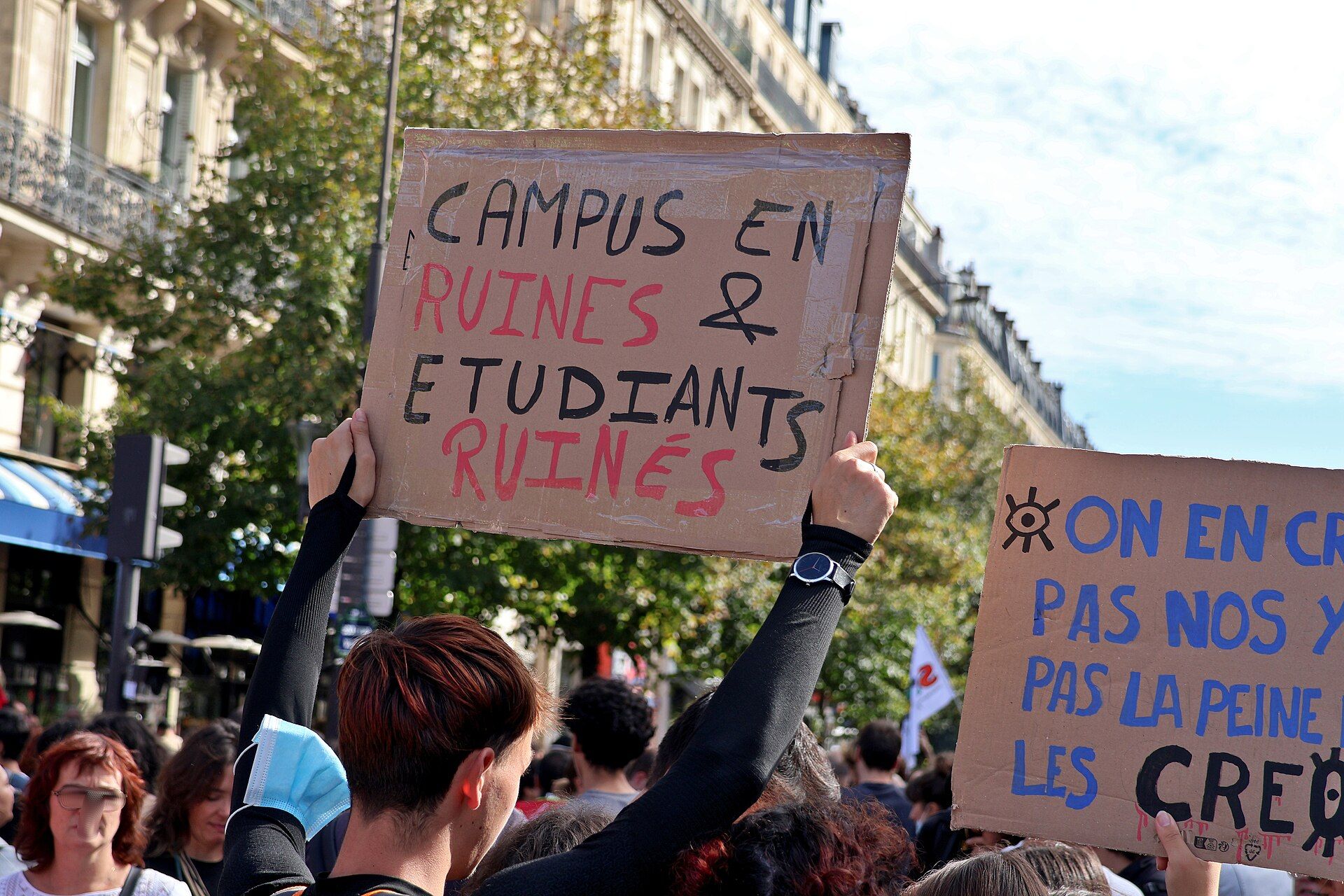
France is in uproar over its schools. What's really going on?
Why it hits youIt's the sharpest version of the anger sweeping young Europe: students demanding something basic — schools that work — met with tear gas and talk of insurrection. How France handles it is a test other governments are watching closely.
What began as students protesting underfunded, crumbling schools has spread into weeks of nationwide unrest — mass marches, strikes and, this weekend, hundreds of arrests. France is split over who's to blame.
The Facts
What everyone agrees on
Before anyone spins it. Every one of these is checkable.
-
School students began blockading schools in early October 2026 over underfunding, with police using tear gas and water cannon as protests spread nationwide. NPR ↗
-
The protests ran for weeks and broadened as the CGT union and other groups joined during the school autumn break. Fortune ↗
-
On the weekend of 24–25 October, violence flared amid largely peaceful protests, with close to 1,000 people arrested. ABC (Australia) ↗
-
Earlier unrest included looting in Paris, Marseille, Lyon and Bordeaux and a fire that nearly destroyed Limoges' 19th-century city hall. Fortune ↗
-
President Macron condemned the violence, blamed far-left activists, and vowed to hold accountable those who “sought to bring down the Republic.” NPR ↗
Every Side · 1 of 3
The students' case
This started with broken schools — and being ignored
For the students, the cause is concrete: understaffed, run-down schools, worst in the poorest areas. They blockaded and marched peacefully for weeks before any violence, and say the state only paid attention once things escalated. As the school autumn break arrived, the CGT union and others joined, widening the demands to living costs and collapsing public services.
- High-school and university students
- The CGT trade union
- Teaching staff
Side labels are our editorial calls for now. How we'll rate lean
Every Side · 2 of 3
The government's case
You don't burn a Republic to fix a school
The government accepts the right to protest but not the arson, looting and hundreds of arrests that followed. President Macron has condemned the violence, blamed far-left activists for hijacking a student grievance, and vowed to hold accountable those who “sought to bring down the Republic.” The line: destruction isn't dissent, and it only hurts the communities it hits.
- President Emmanuel Macron
- The French government
- Police authorities
Side labels are our editorial calls for now. How we'll rate lean
Every Side · 3 of 3
How it escalated
A school protest became a lightning rod
A neutral read: a specific education grievance became a channel for much broader discontent — cost of living, inequality, distrust of Macron. Most protesters remained peaceful; a violent minority, plus heavy policing with tear gas and water cannon, drove the escalation. Arrest figures are large but lump together peaceful marchers, minors and rioters, so the headline numbers hide who's actually who.
- NPR
- ABC (Australia)
- Protest researchers
Side labels are our editorial calls for now. How we'll rate lean
The Blindspot · what the headlines skip
The original cause gets lost once windows break
Once there's fire and looting, coverage shifts from school funding to “riots.” The thing that started it — the state of France's schools — can drop out of the story entirely.
The Blindspot · what the headlines skip
“Arrests” is a number hiding several groups
Peaceful marchers, minors and a violent minority all get counted together. A big arrest figure tells you about scale, not about who did what.
The Blindspot · what the headlines skip
Blaming 'the far left' is a familiar move
Pinning unrest on outside agitators is a well-worn political response that can conveniently sidestep the underlying policy grievance. Whether it fully explains the violence is contested.
The Blindspot · what the headlines skip
France has done this before
From the Yellow Vests to pension strikes, mass protest is woven into French politics. This isn't a bolt from the blue, and that history shapes how both sides are behaving now.
Your Call
- The students' case: not yet
- The government's case: not yet
- How it escalated: not yet
Only you can see this. It's saved on this device and never sent anywhere.
Receipts
Every source, one tap away
Don't take our word for it. This is everything the breakdown is built on.
Hero image: Photo: FreCha / Wikimedia Commons, CC BY-SA 4.0 · Paris, 6 October 2026 ↗
By No Glaze News · published
Next story The Budget is Wednesday. Here's what's actually at stake for you.